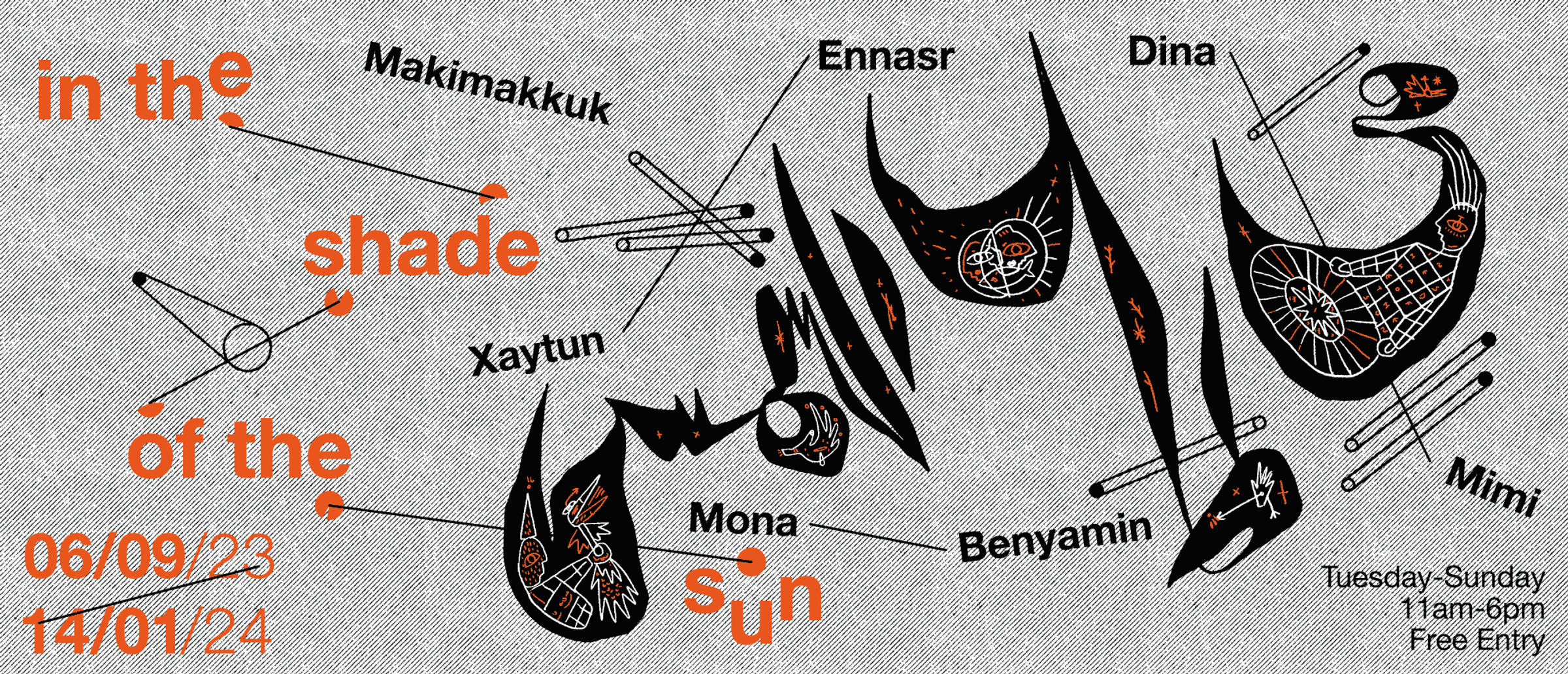
In the shade of the sunفي ظل الشمس
About the Exhibition
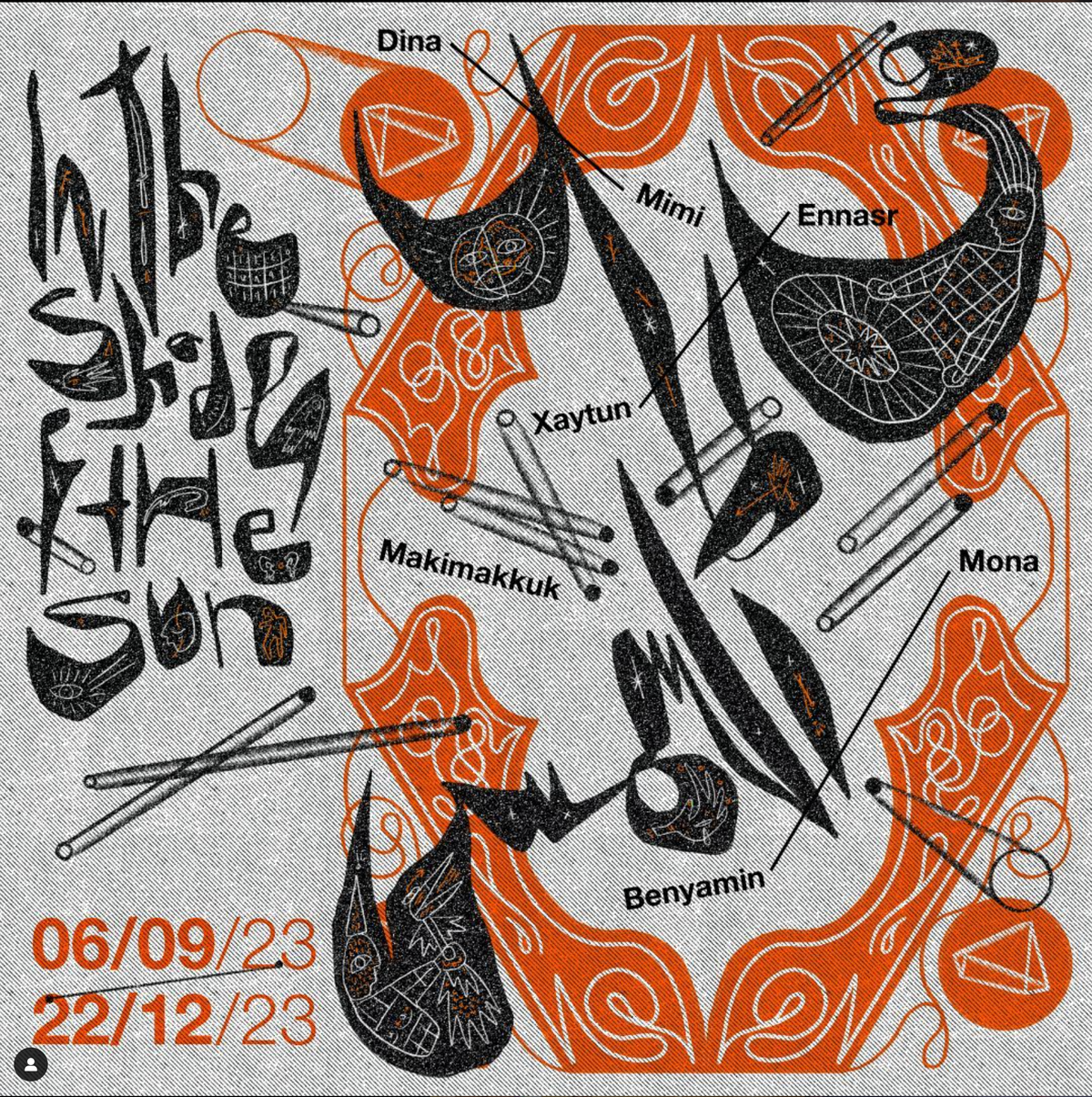
6/09/23—14/01/24
In the shade of the sun brings together new commissions from Mona Benyamin, Xaytun Ennasr, Dina Mimi and Makimakkuk at The Mosaic Rooms in London. Each of these artists are forging an entirely new language to think about and with Palestine. Their practices are connected in a radical politics, finding expressions in seemingly soft forms, absurd images, and poetic wanderings.
Adam HajYahia was invited by Bilna’es to curate the public program, he writes:
The public programming for In the shade of the sun builds on what Bilna’es’ exhibition conception already proposes. Methodologically, we need to radically rethink the formulations within which cultural and artistic work is produced, circulated, and consumed. For the burdensome demands of the art market and industry, the invisibilised labour of artists and cultural workers, as well as hierarchies and mediation configurations as we know them, are not conducive to thriving and sustainable futures. Aesthetically, and therefore politically, there is a need to continue the search for a new language to tackle the particularities of our present fascist neoliberal predicaments while also devising alternative assemblages, economies, and relations for an otherwise.
Bilna’es is the Arabic word for ‘in the negative’. The term evokes a politics of being and producing from within the moment of catastrophe, forging from beyond it, the multitude of possibilities across the impossible. This public programme borrows from this methodology to consider the potentialities that could materialise in the cracks of the crises of the present.
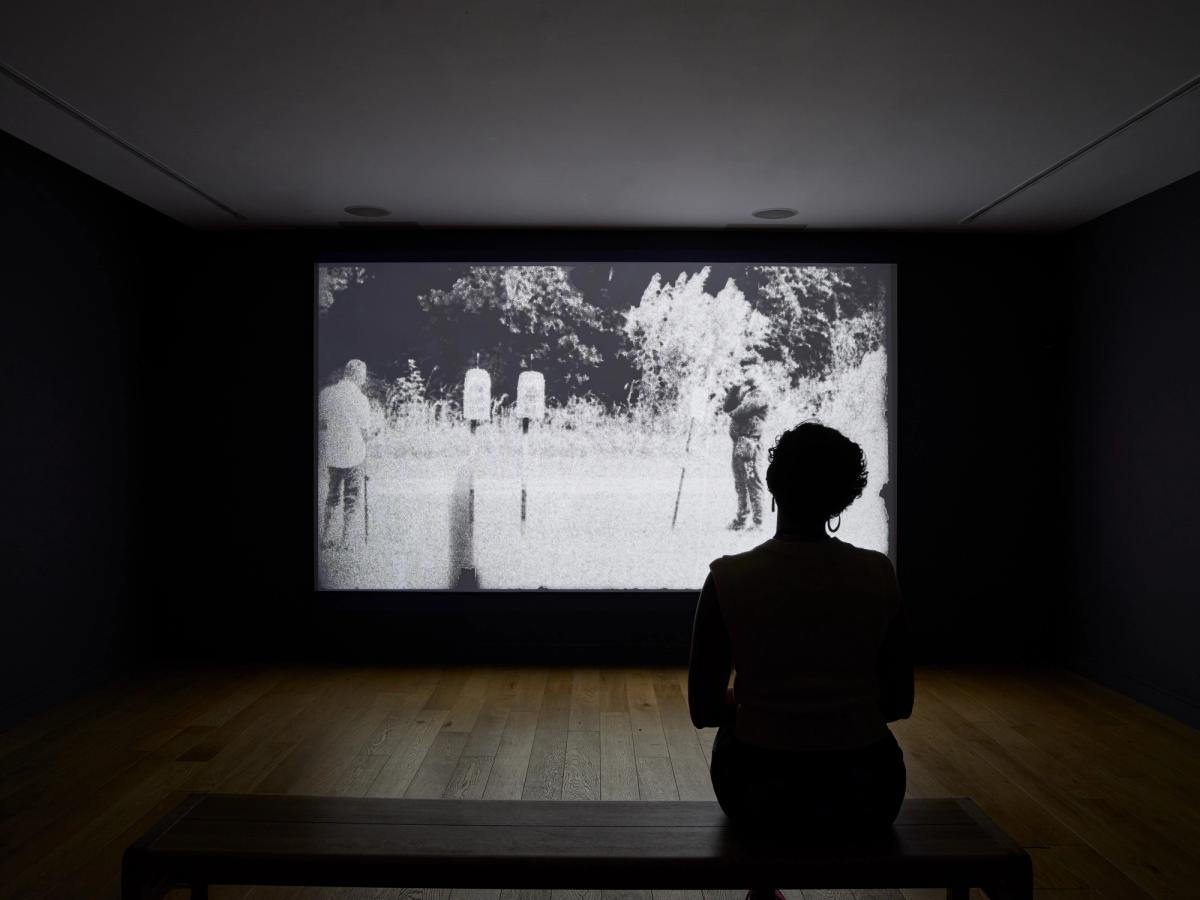
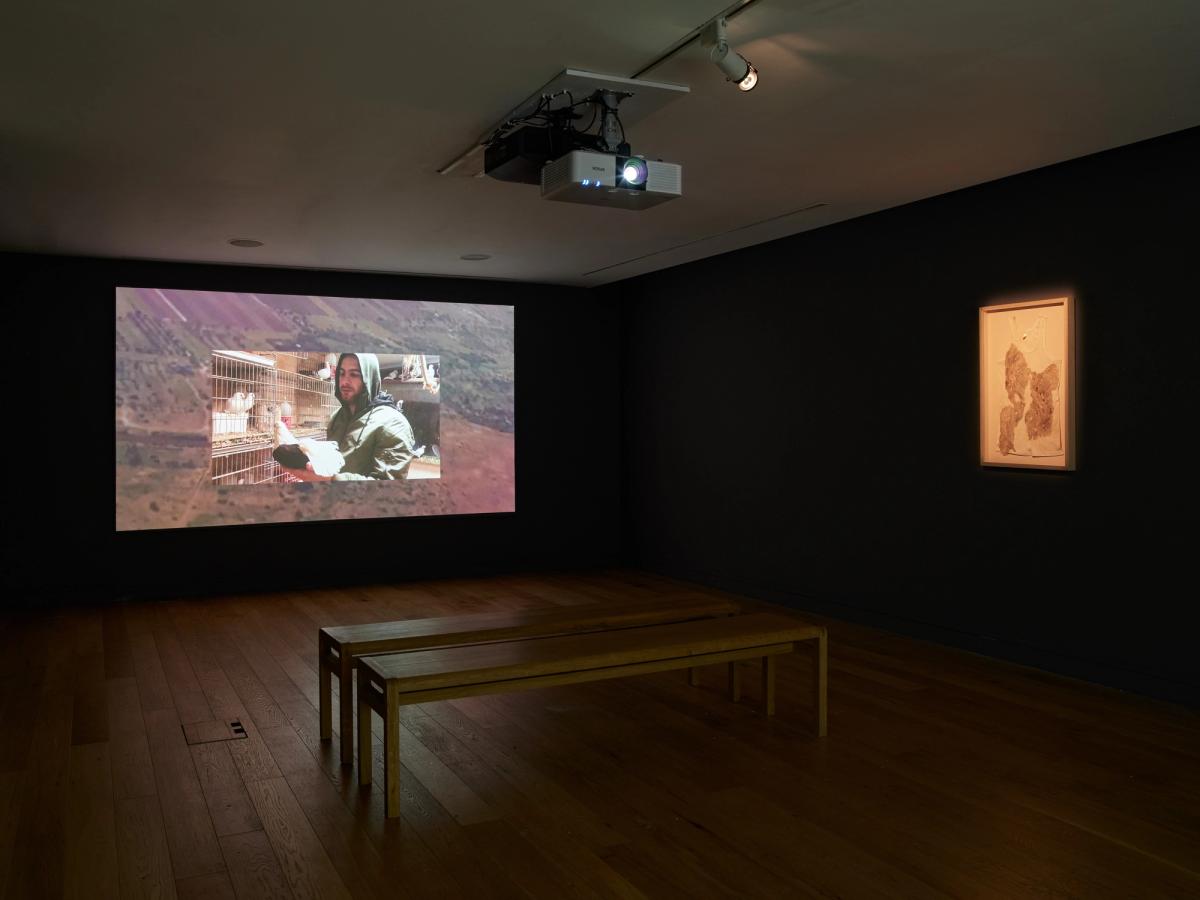
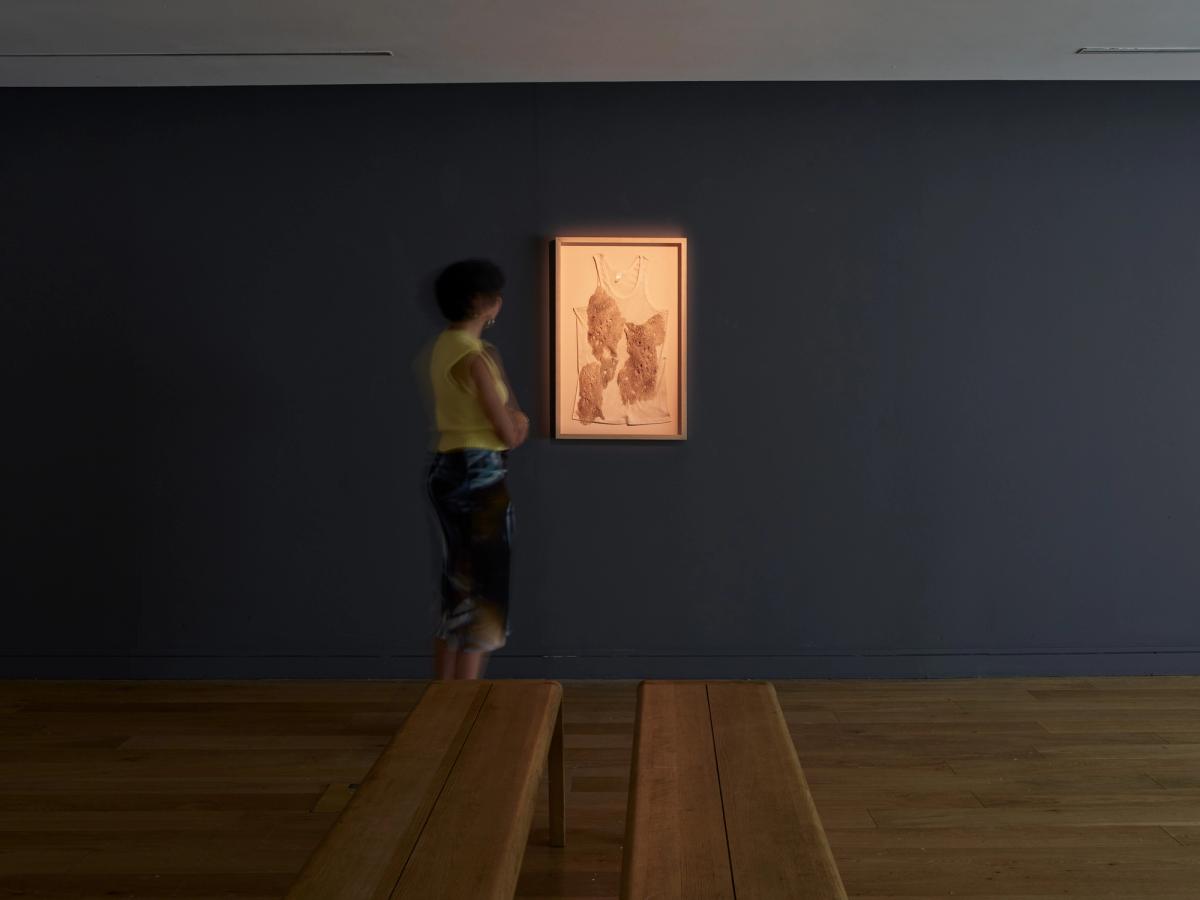
Mona Benyamin, Xaytun Ennasr, Makimakkuk, Dina Mimi
About the Artworks and Artists
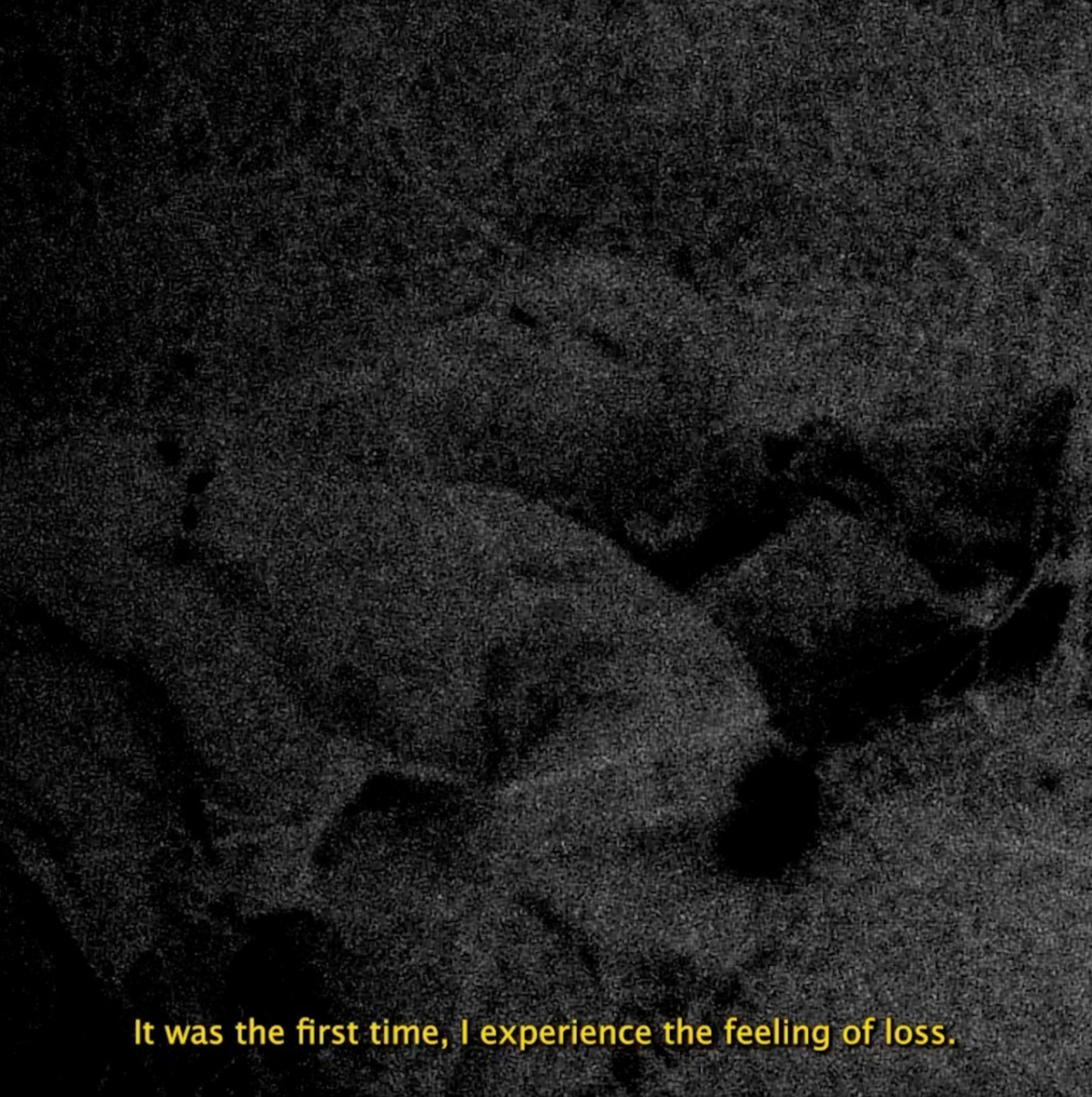
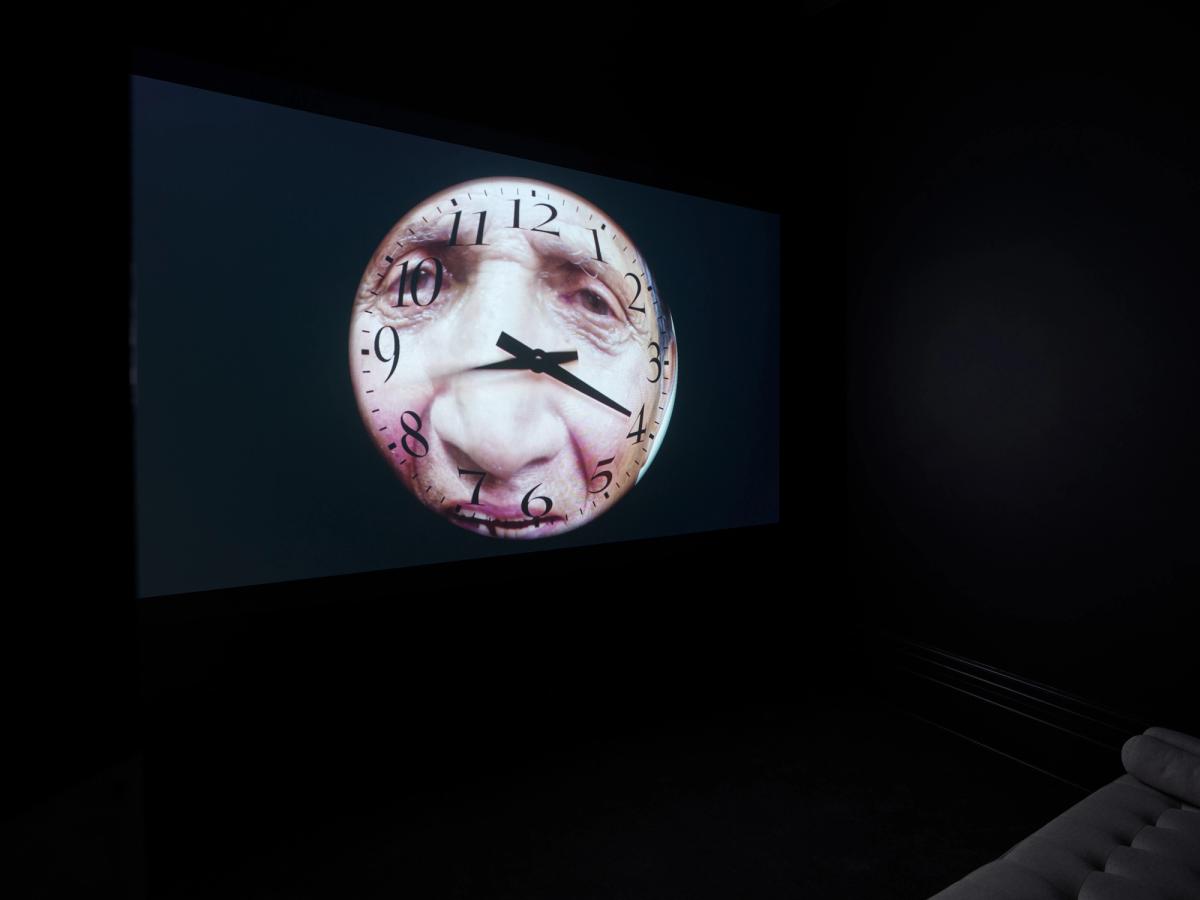
Dina Mimi (@___sa3lok), The melancholy of this useless afternoon
Dina Mimi’s project The melancholy of this useless afternoon unfolds through two chapters reflecting on the role of the fugitive and the smuggler. Chapter I layers images of birdsong competitions, revolutionary songs from Oman, Yemen and Palestine with a narrative contemplating movement, loss, separation, and revolutionary practice. Chapter II employs a clandestine style to document the practice of bird smuggling and the part the human body plays in this act. These are accompanied by a framed vest with an organic material resembling what the birds are traditionally hidden within.
Dina Mimi is a visual artist who lives and works in Jerusalem. Her practice is multifaceted and uses video, sound, performance, and text. Dina has been researching issues and subjects regarding the body and death in the public sphere, and notions of visibility and invisibility in the relation of archaeology to the object, and the museum to death. She has also been researching protest as a performance. Her work examines the role of the body-force in public space in Palestine.
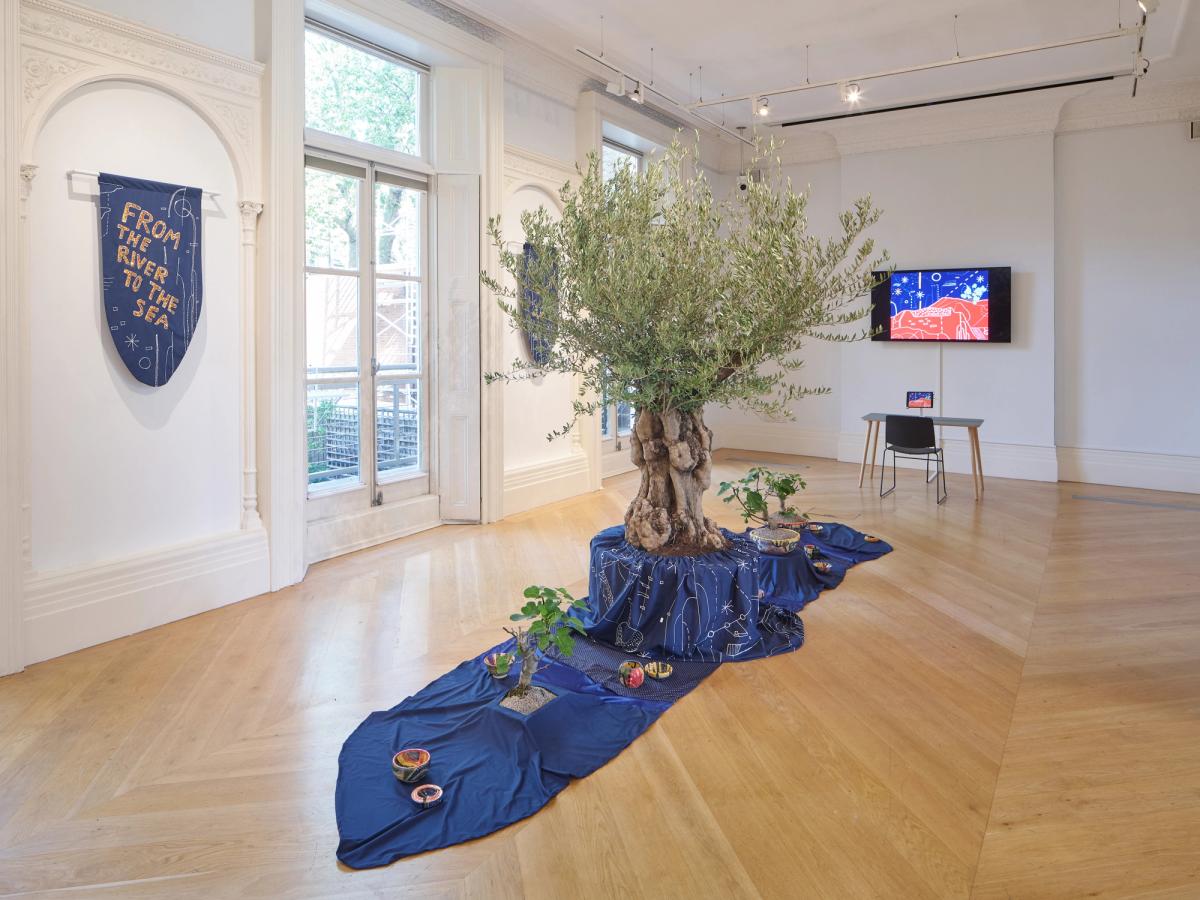
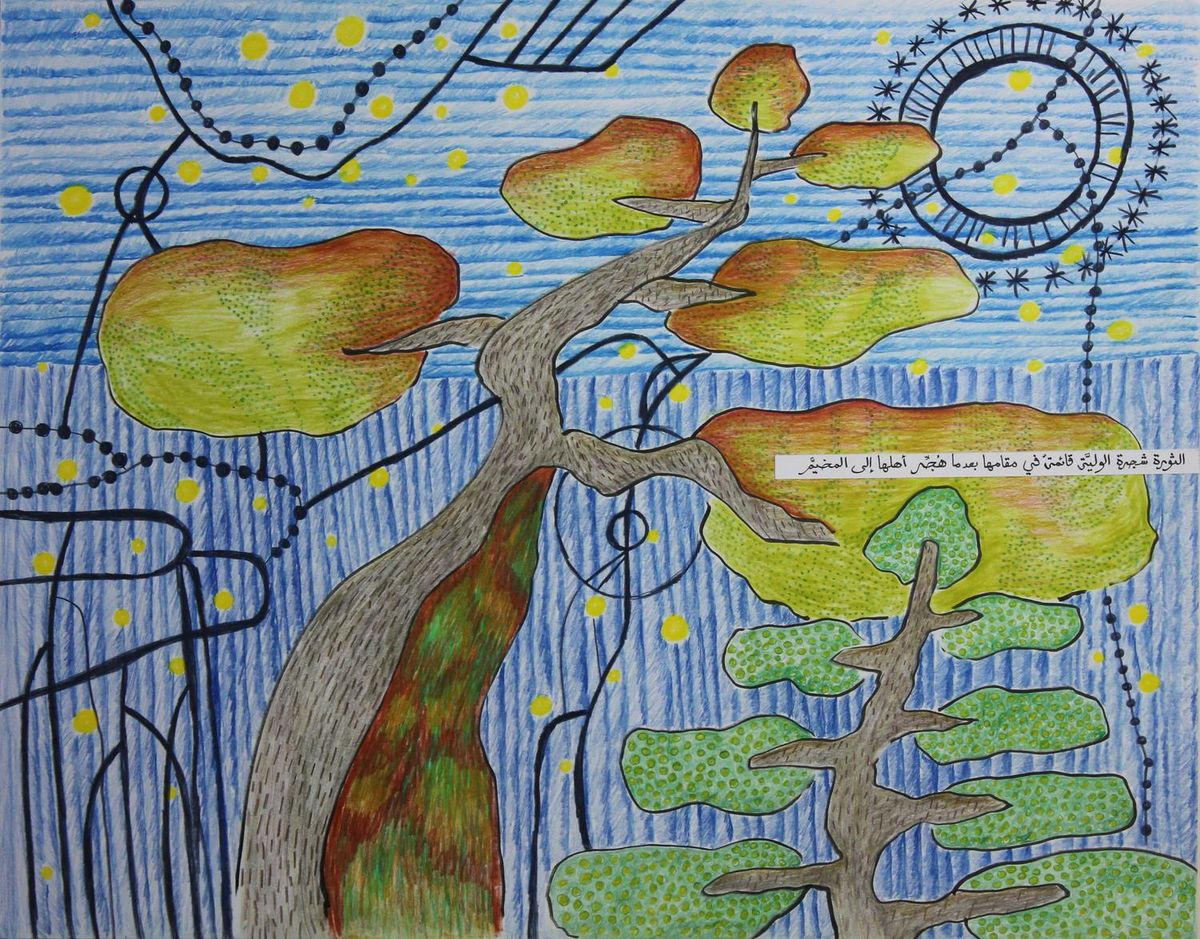
Xaytun Ennasr (@fallahipunk), Revolution is a forest that the colonists can’t burn,
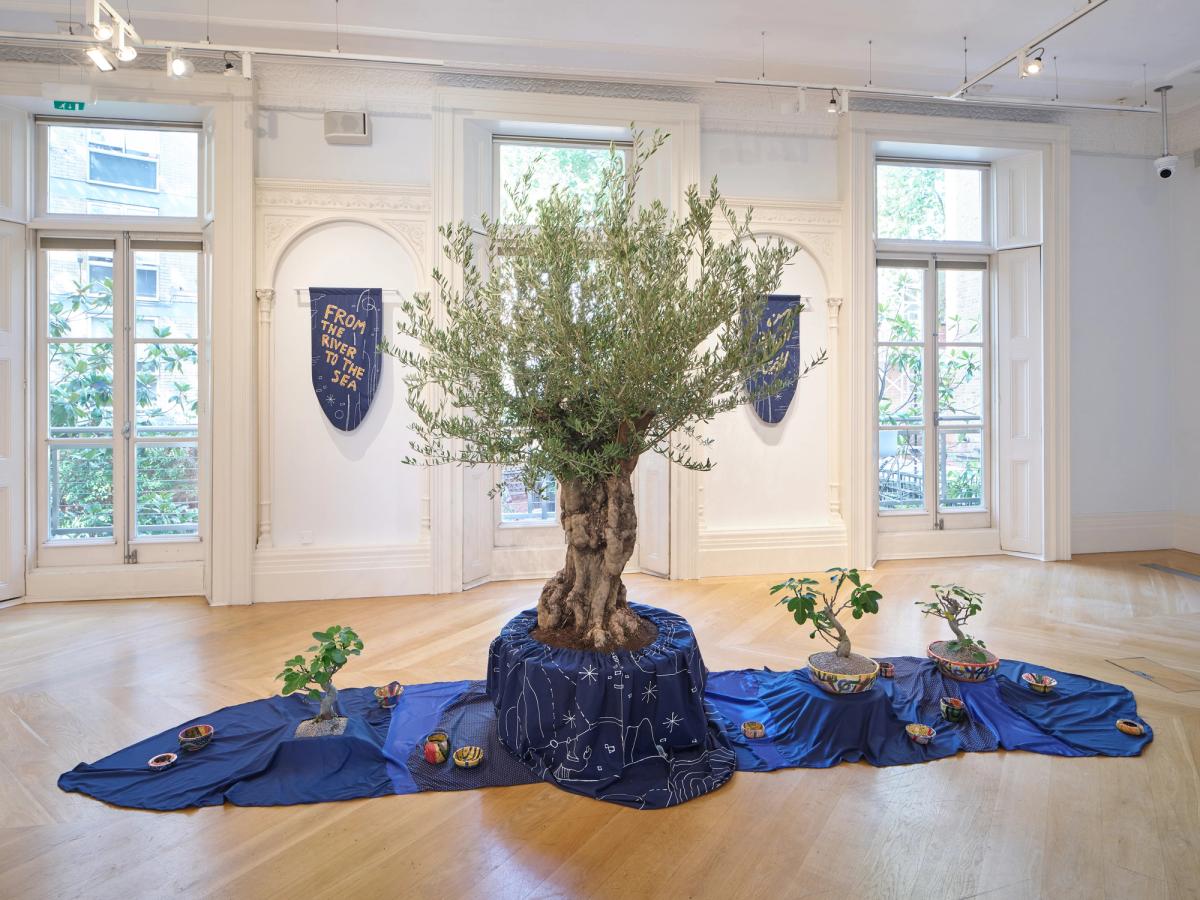
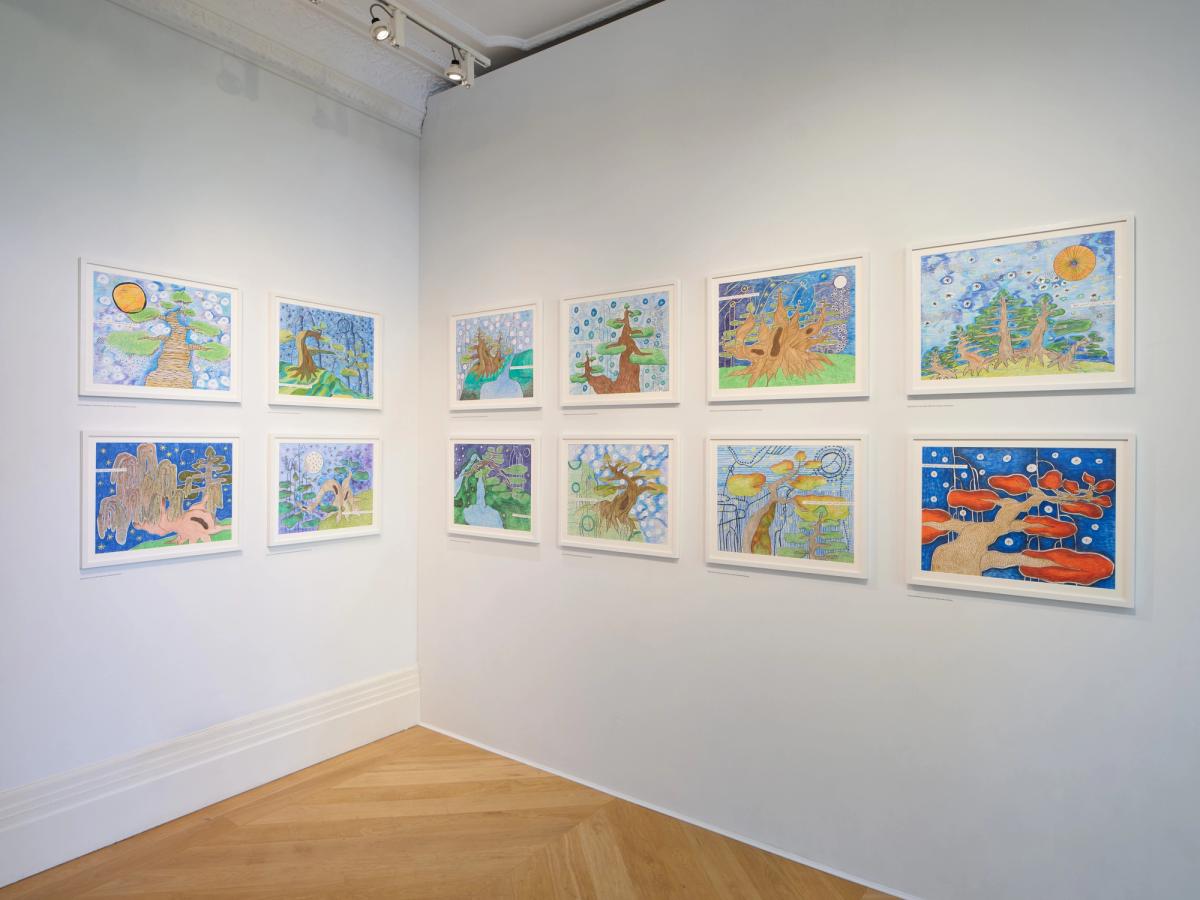
In their multimedia installation, Revolution is a forest that the colonist can’t burn, Xaytun Ennasr celebrates trees as symbols of resistance and devotion. Through the artist’s aesthetic of radical softness, the installation examines what a revolutionary relationship with nature looks like. Trees are situated not as resources waiting to be extracted but as beings that are loved and that love back. That relationship is presented through a variety of media, including drawings, poetry, ceramics, textiles, living olive and fig trees, and an interactive digital game.
Xaytun Ennasr’s work as a multidisciplinary artist is centered around the liberation of Palestine, radical softness, and revolutionary cultural production. They use a variety of mediums including video games, drawings, ceramics, installation, and text to start a conversation around a world that transcends beyond the oppressive capitalism, colonialism, and patriarchal reality of the one we currently occupy.
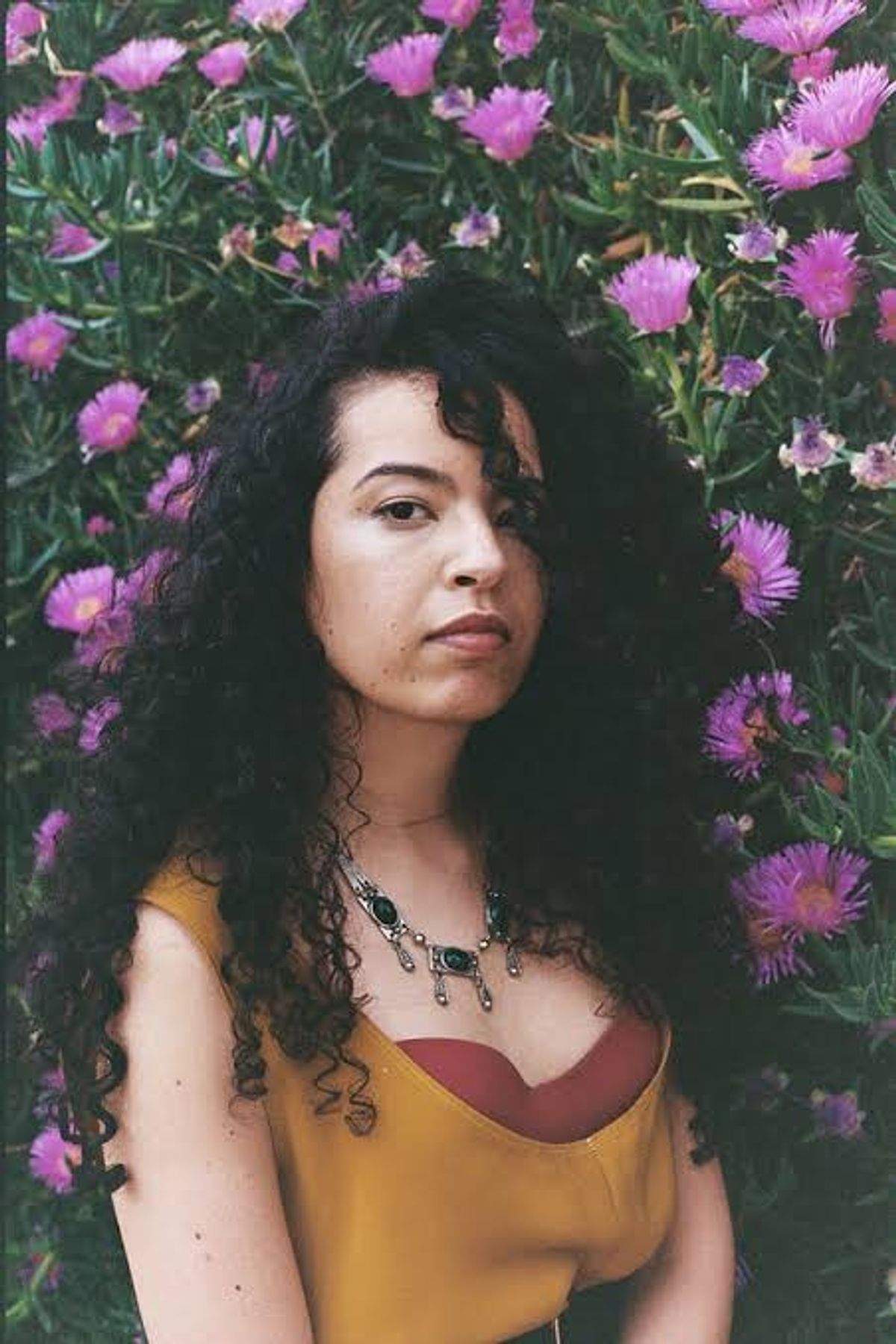
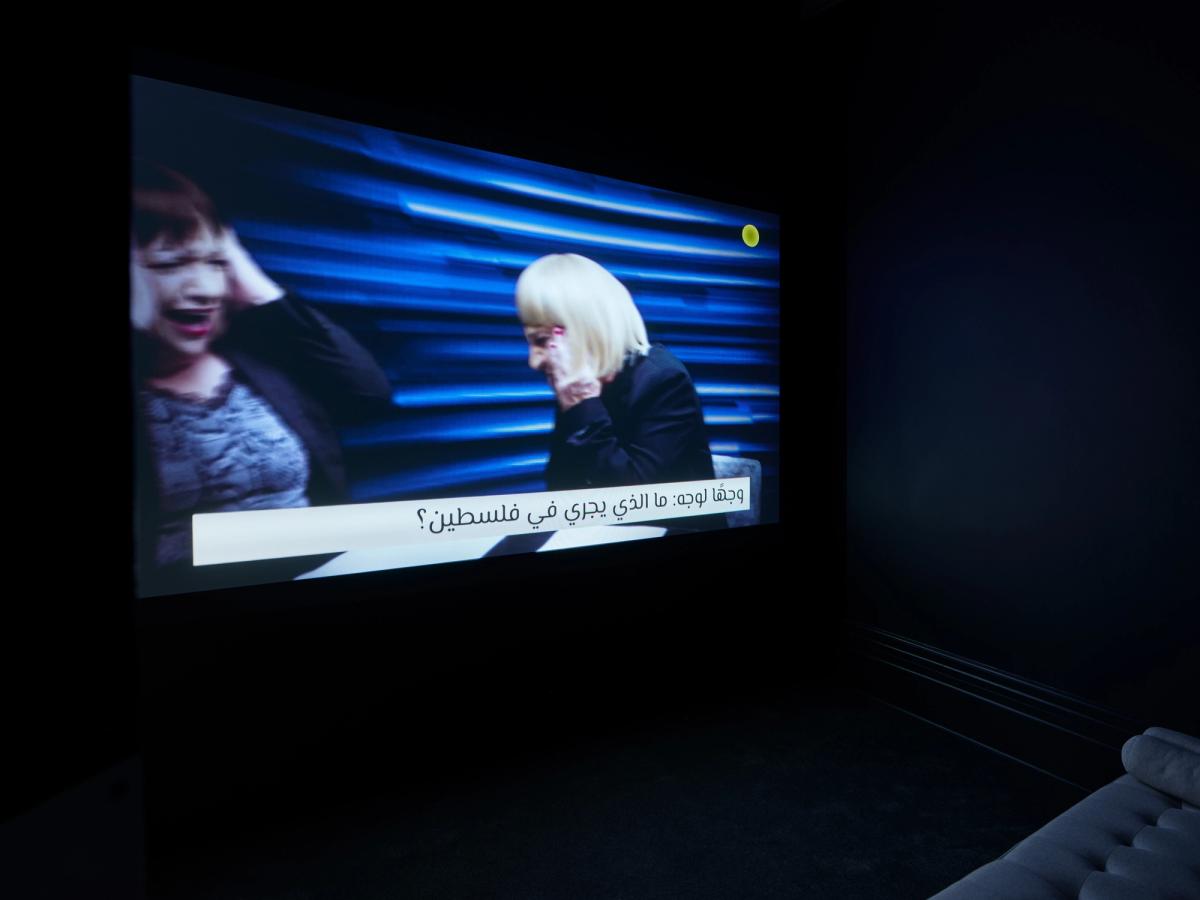
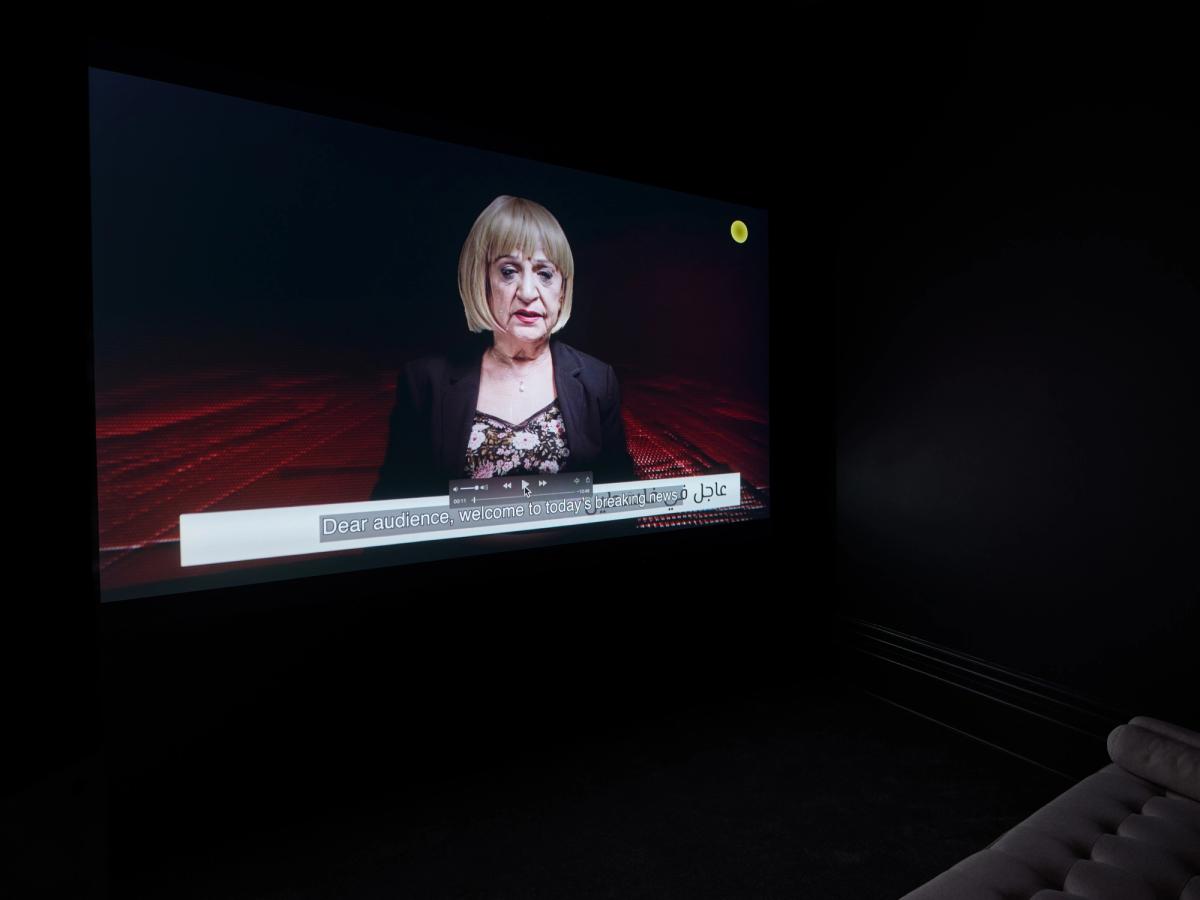
Mona Benyamin, Tomorrow, Again
Tomorrow, Again, by Mona Benyamin stages a dysfunctional news broadcast that consists of different segments which recreate and react to various prominent daily catastrophes from Palestine. Instead of a spoken narrative, the film resorts to exaggerated emotional and physical displays. It utilises fragmented and often conflicting testimonies, doppelgängers, and a surrealist visual language to draw on notions of truth and fiction, and differing temporalities. The cast of the film sees two protagonists, the artist’s parents, assume multiple identities as they narrate and consume their own stories in an endless cycle.
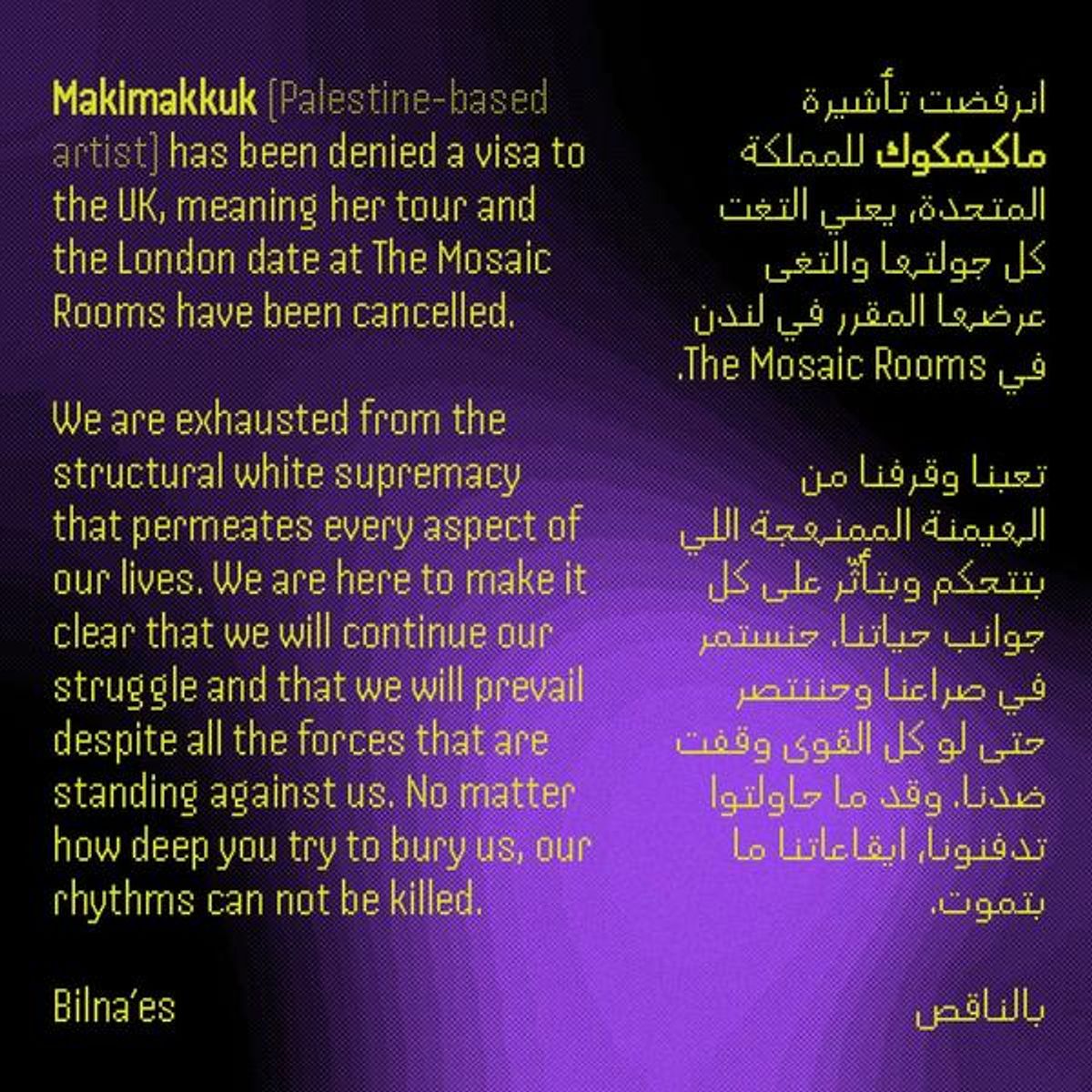
Makimakkuk (@makimakkuk), What remains in the museum
Sonic Live Performance (Canceled)
Makimakkuk was set to debut a newly commissioned sound work titled What remains in the museum. The multi-layered work was meant to sonically reflect on identity, colonisation, love and relationships. It was set to be performed singularly live in the exhibition during a special event.
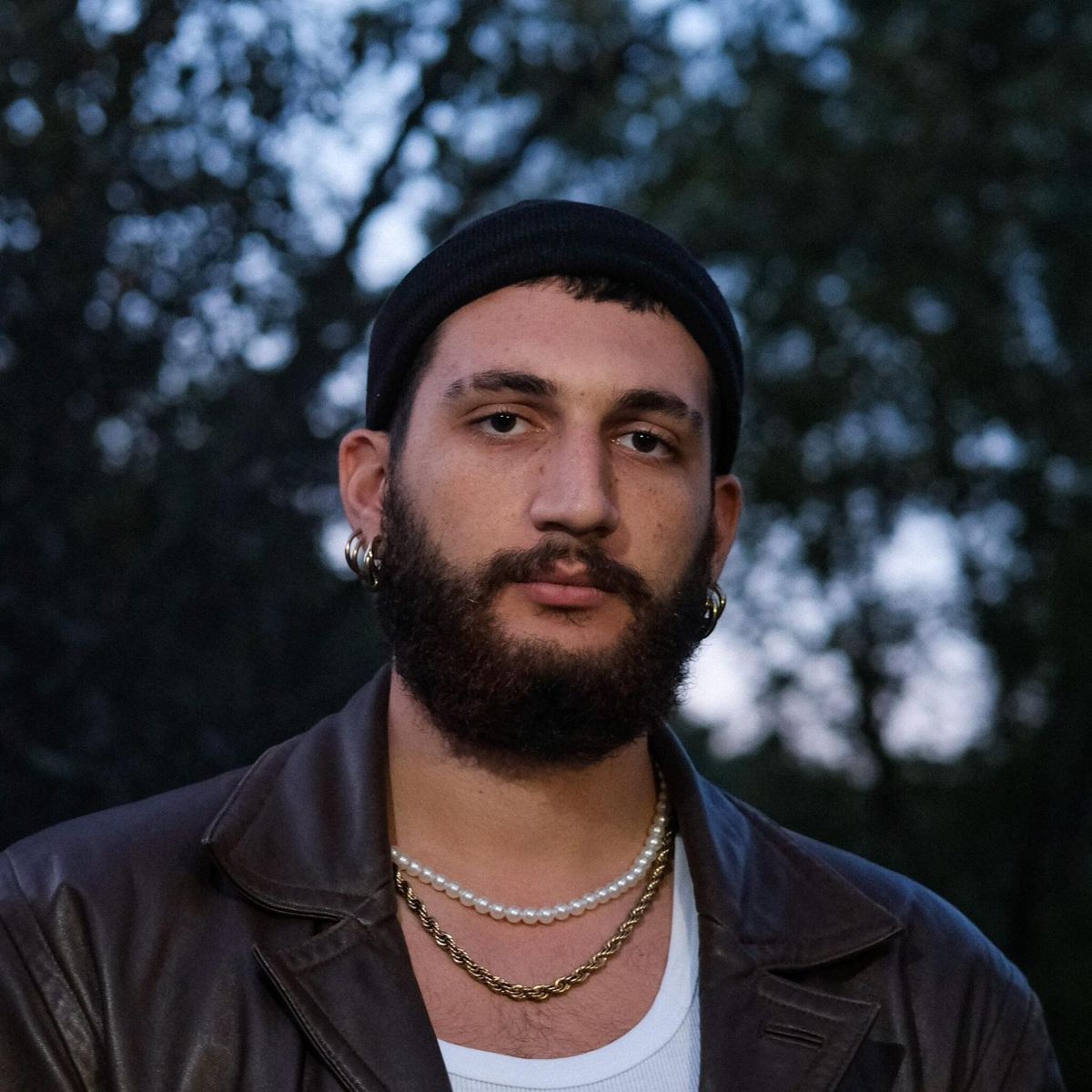
Adam HajYahia (@kimikku) has been specially invited by Bilna’es to co-curate the exhibition’s accompanying public programme.
HajYahia is an independent researcher, curator, and culture producer. He is from Haifa, Palestine. Adam’s research interests revolve around structural an is hierarchical violence, and its intersections with capitalist, colonial, sexual, and social dynamics in Palestine and beyond.
Under the glare of the moonتحت وهج القمر
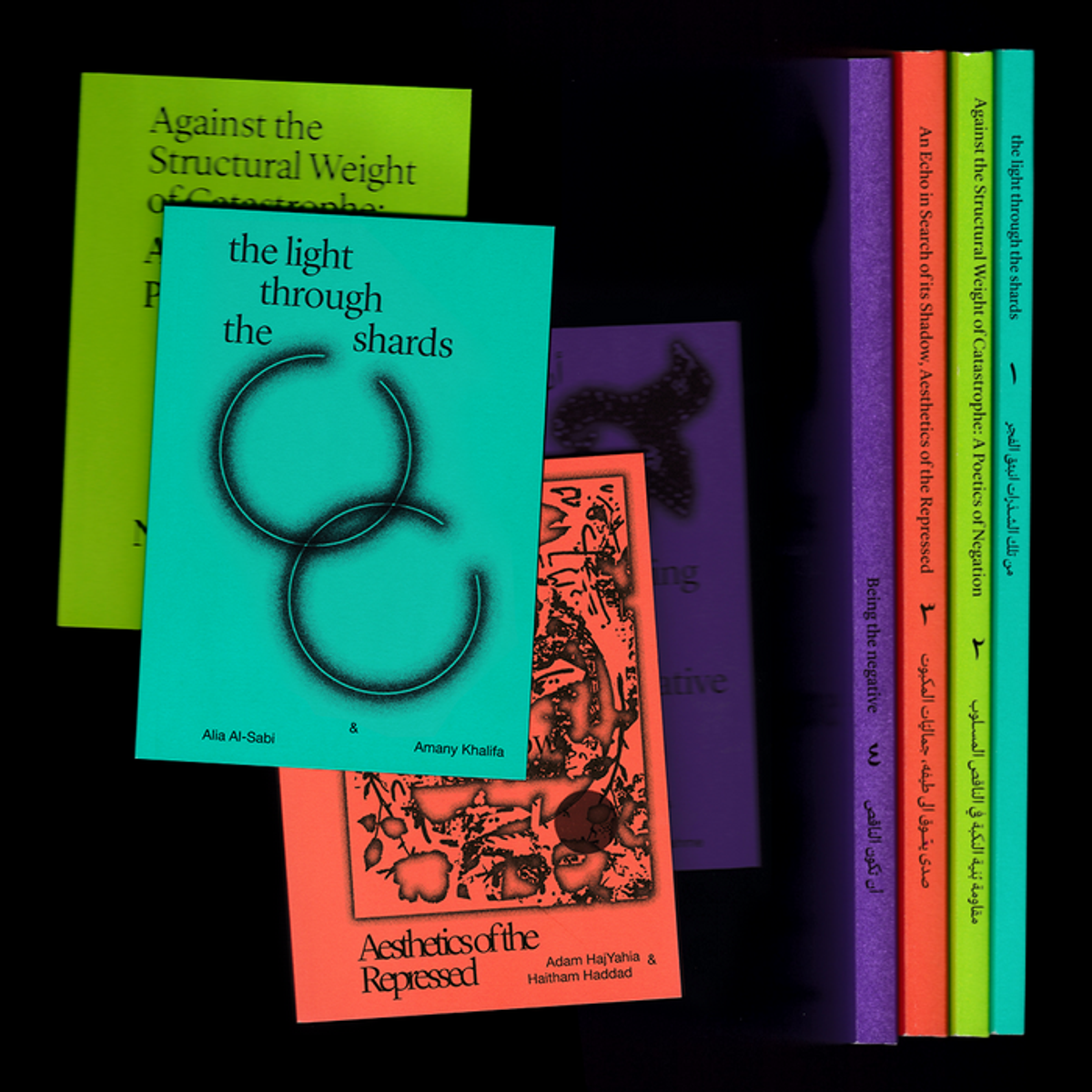
To all those we are indebted to إلى كلِّ الذين نحن مَدينون لهم
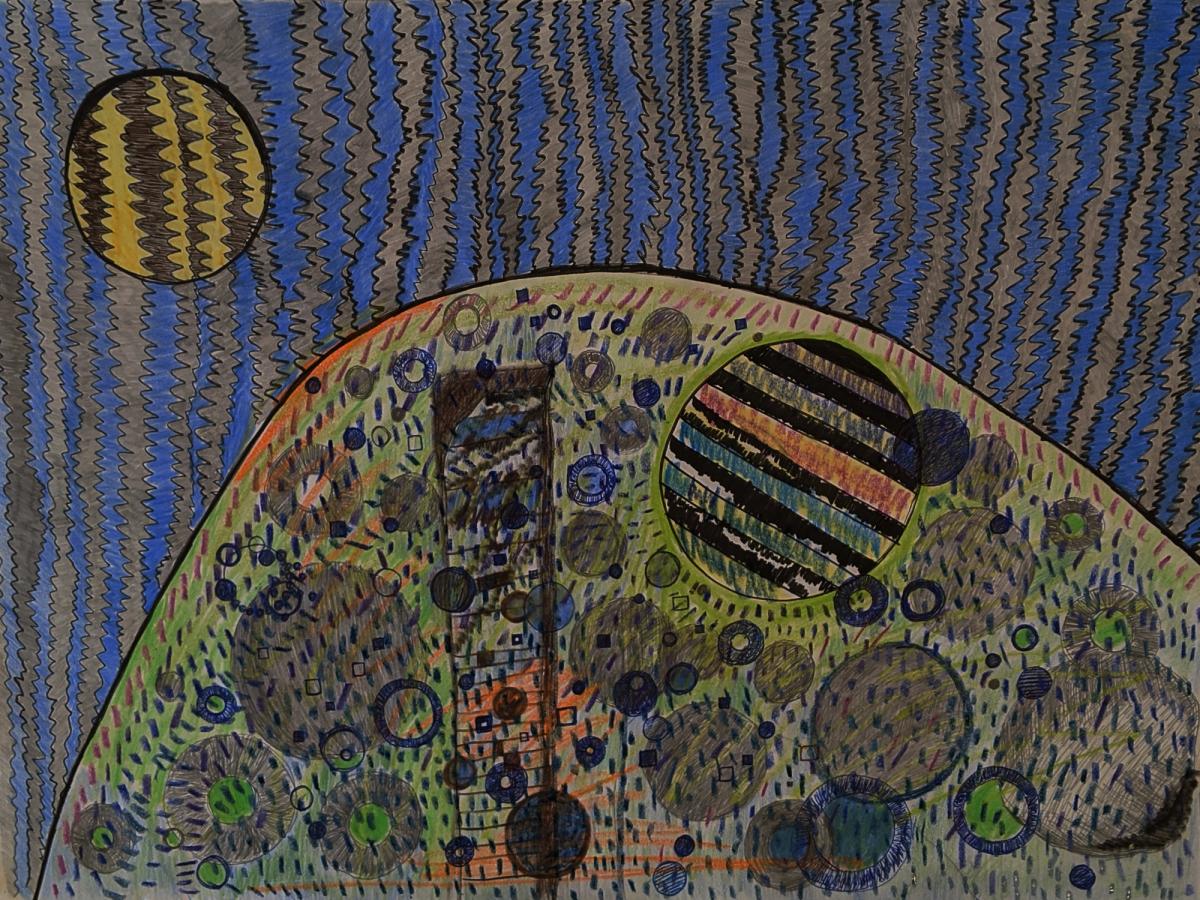
Xaytun Ennasr: Nothing old, Nothing Newزيتون النصر: لا جديد، لا قديم