Speaking with the deadالتحدث مع الأموات
About the Exhibition
Speaking with the dead explores the perplexing conditions of debt. As a colonial-capitalist category, debt has a double bind through its positivity and negativity: debt as a social relation and a structure of sociability amongst the repressed, an unpayable debt owed yet not owned, and indebtedness and inheritance in struggle, which we owe to those who came before us, and those fighting today.
Bringing together artists who work across traditions and artistic forms, Speaking with the dead stages the dialectical relation to debt as situated within global histories of struggle against colonial capture and capital accumulation. From prison corridors to junkyards, and lives below the soil, this presentation asks: what becomes of aesthetics labored from within the precondition of precarity and lack? What is debt as a binding condition, debt when inherited, and debt refused?
About the Artworks and Artists
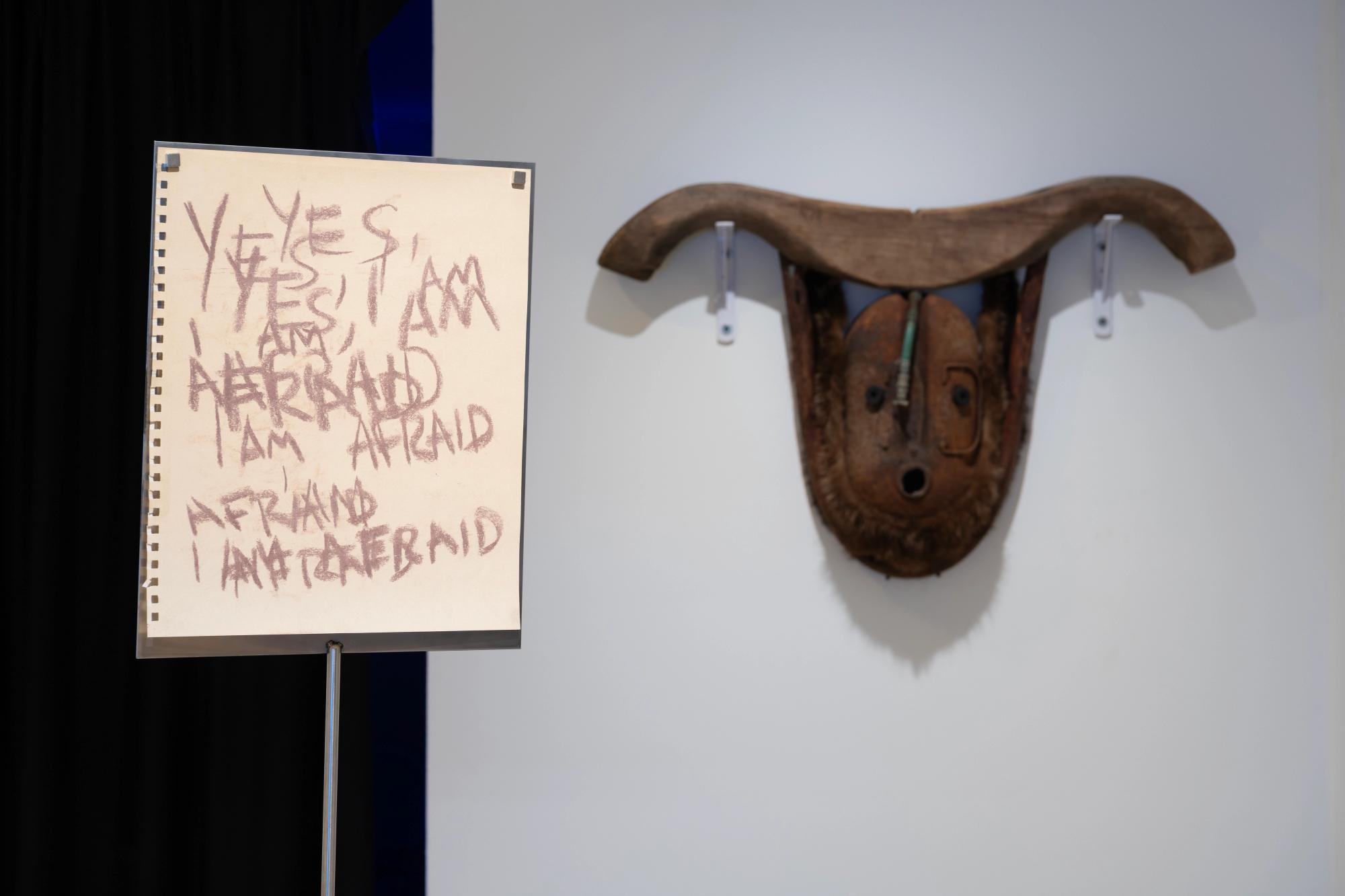
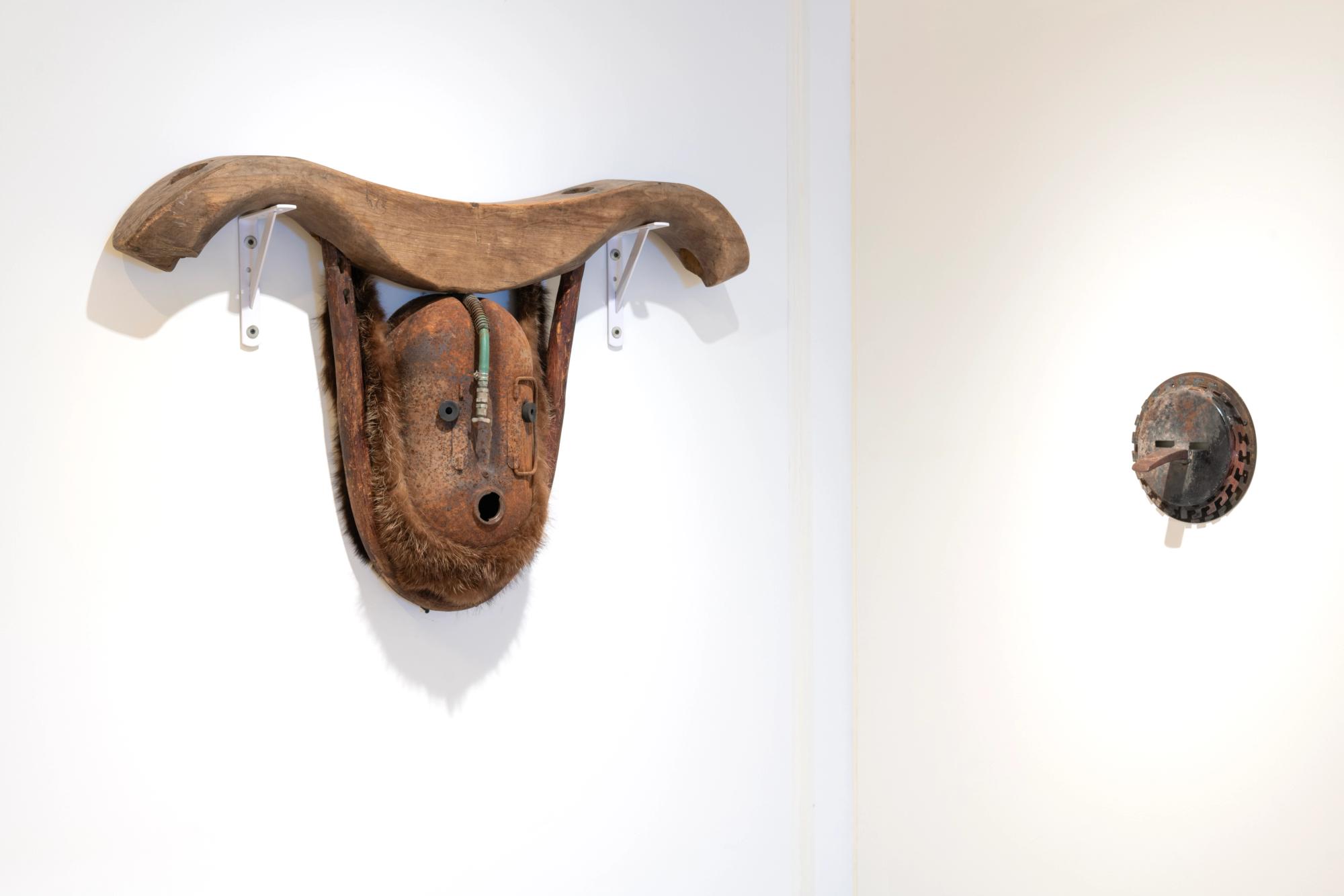
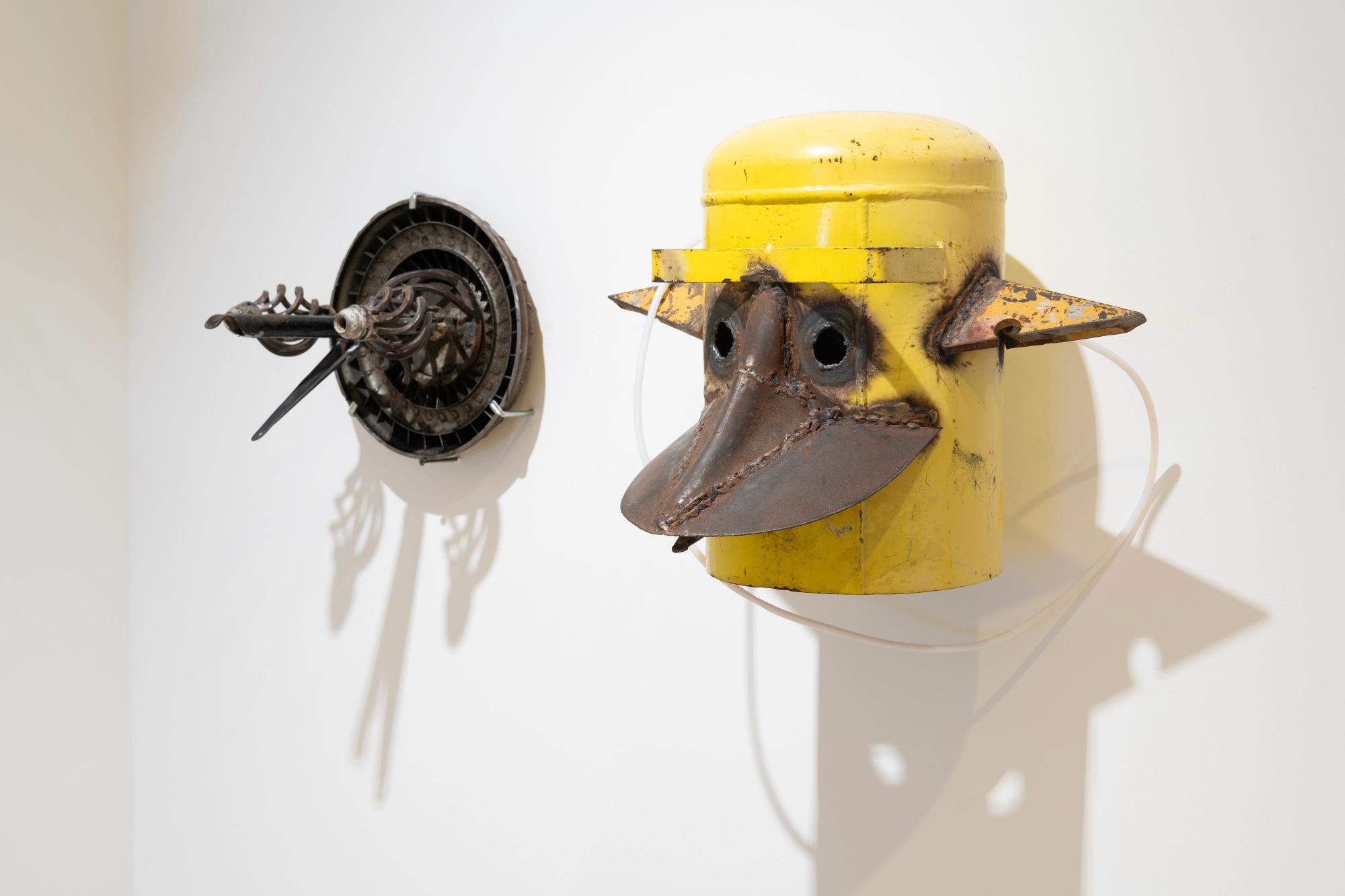
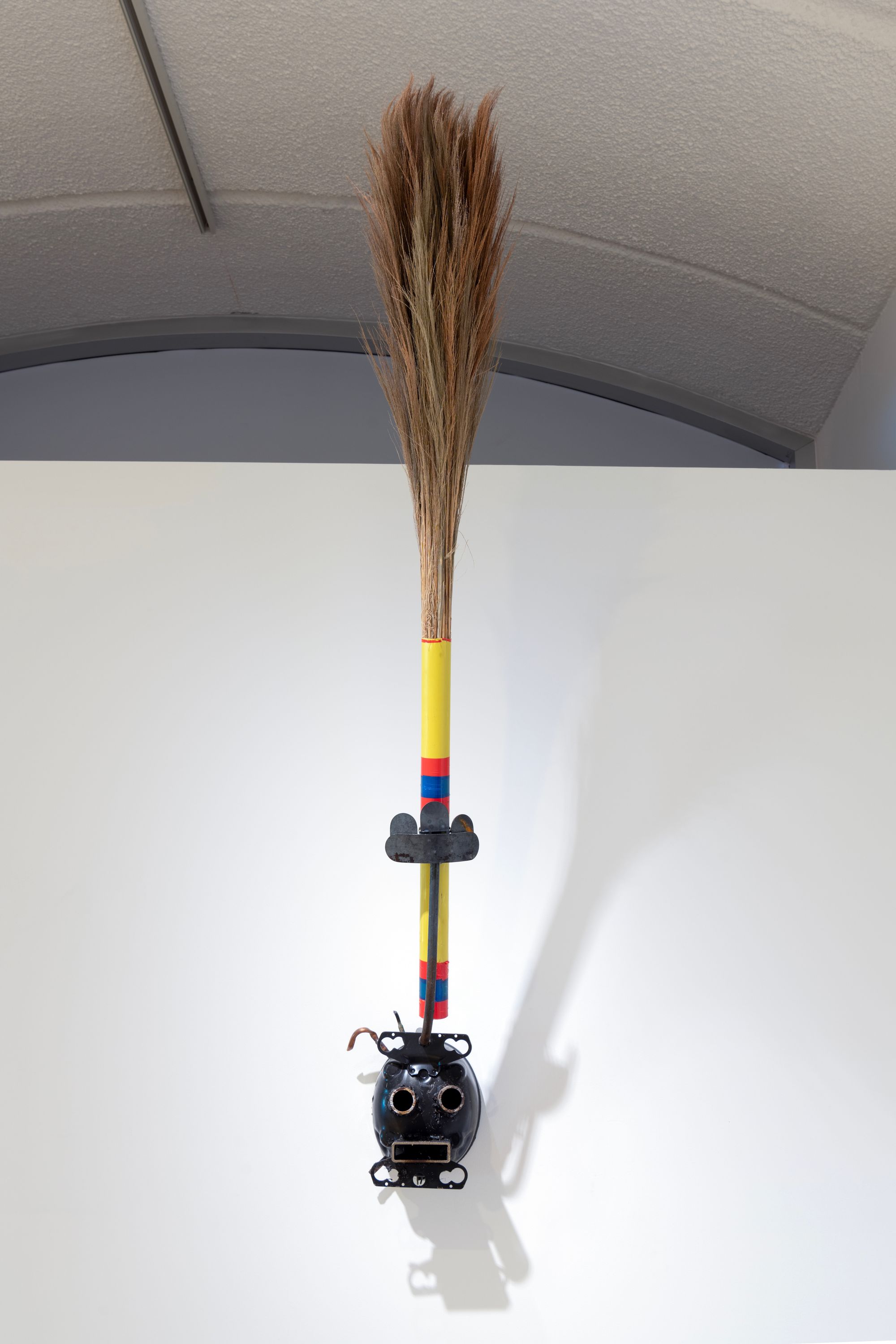
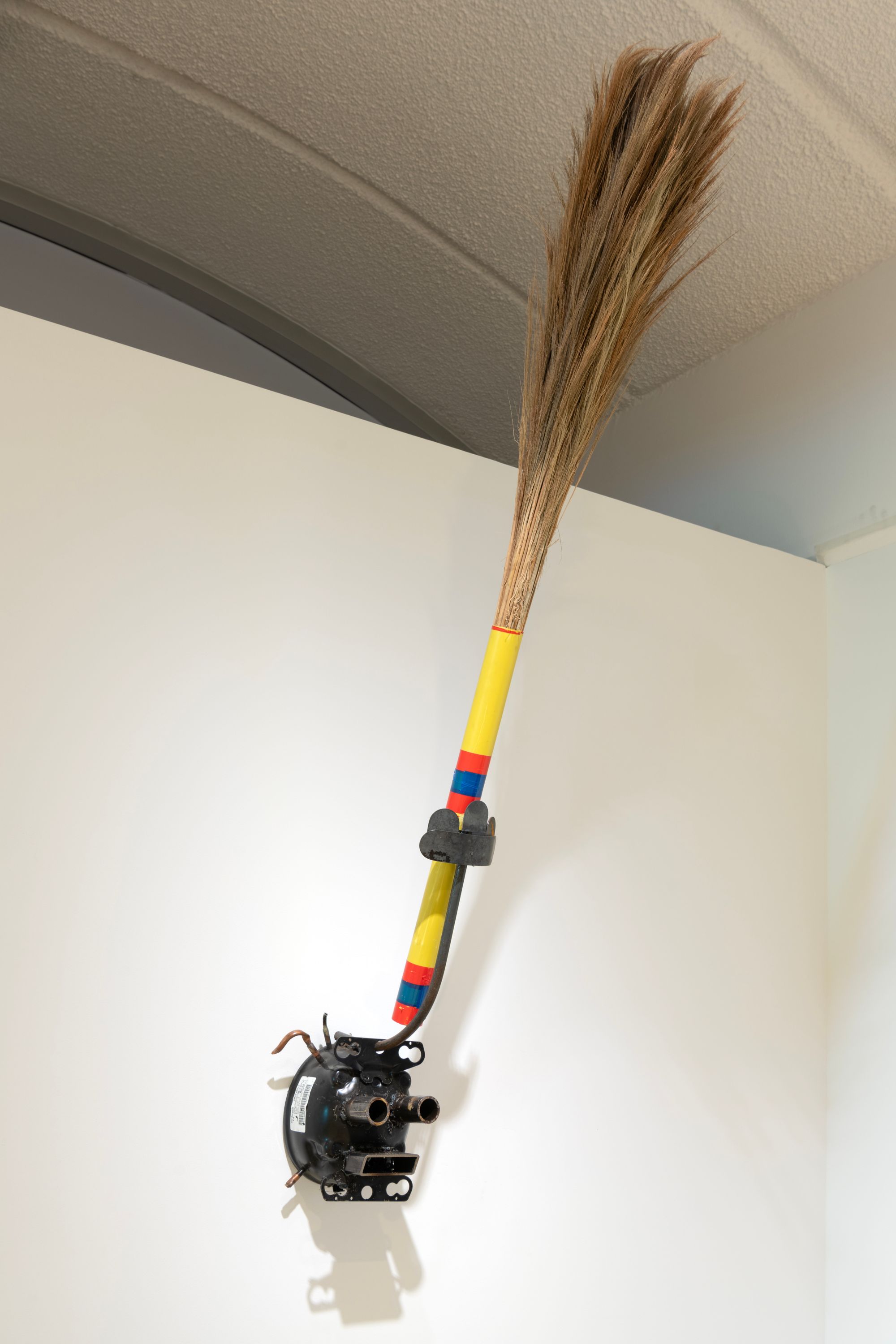
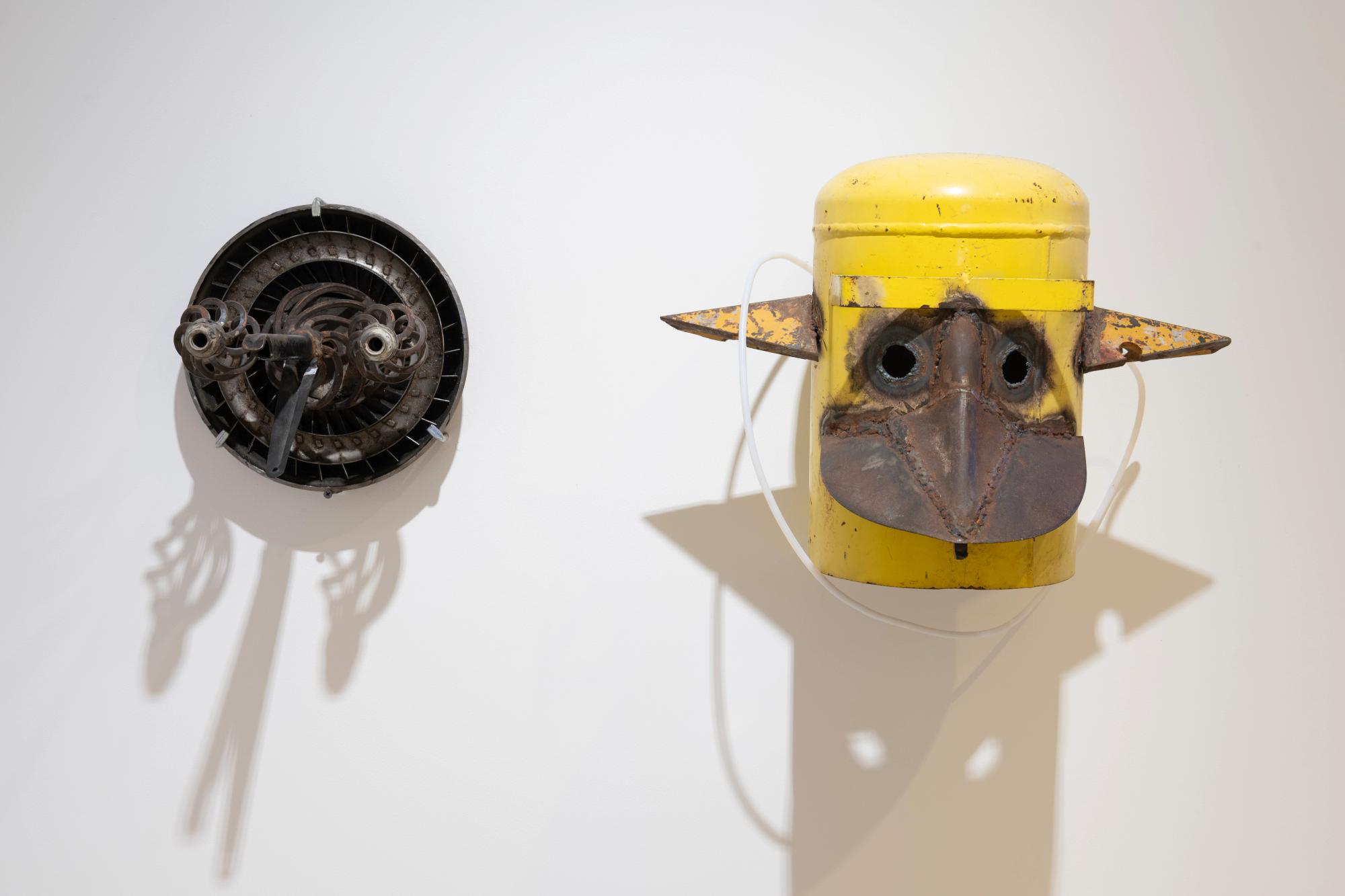
Oscar Gardea
Tecuani (Masks produced from waste)
2017
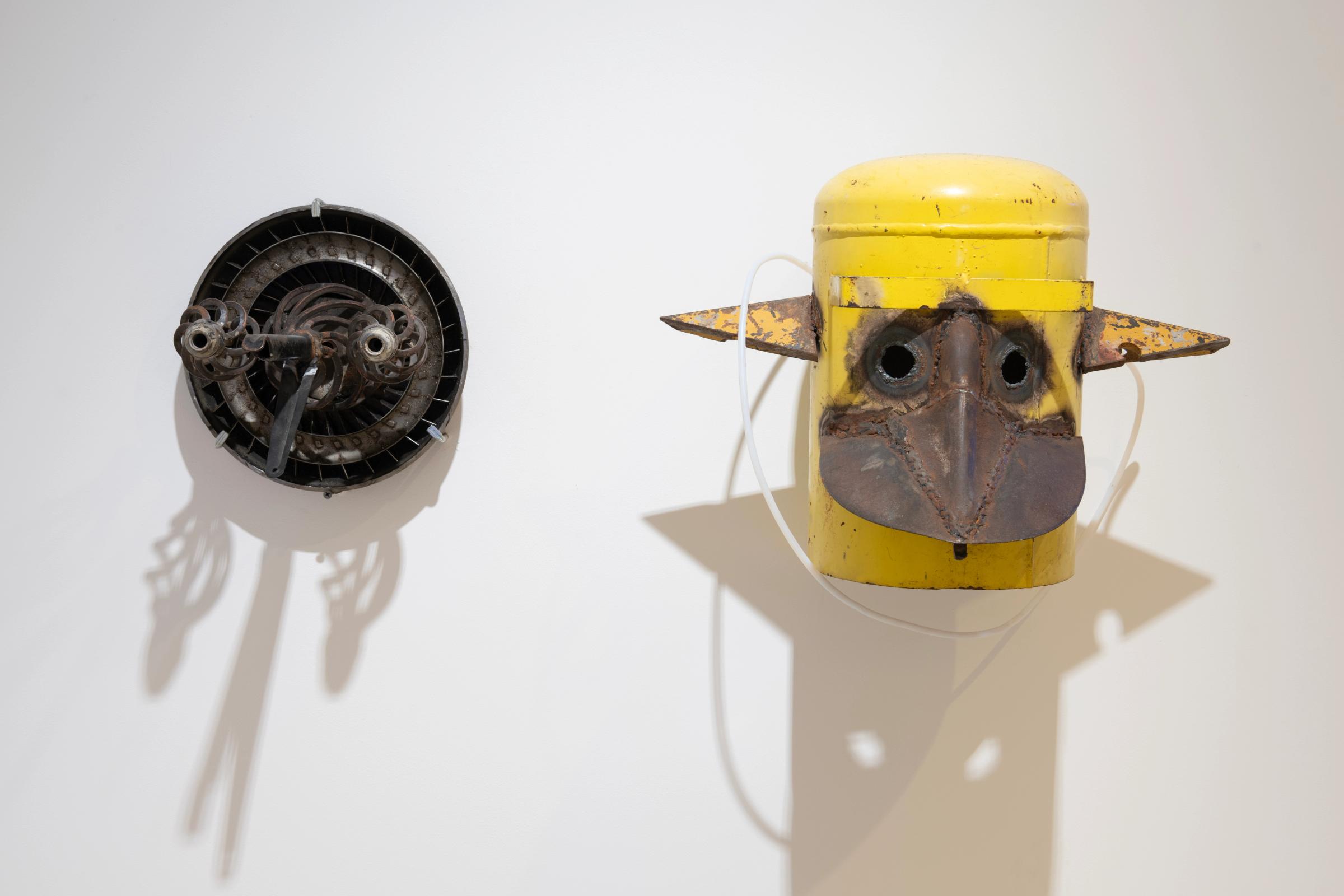
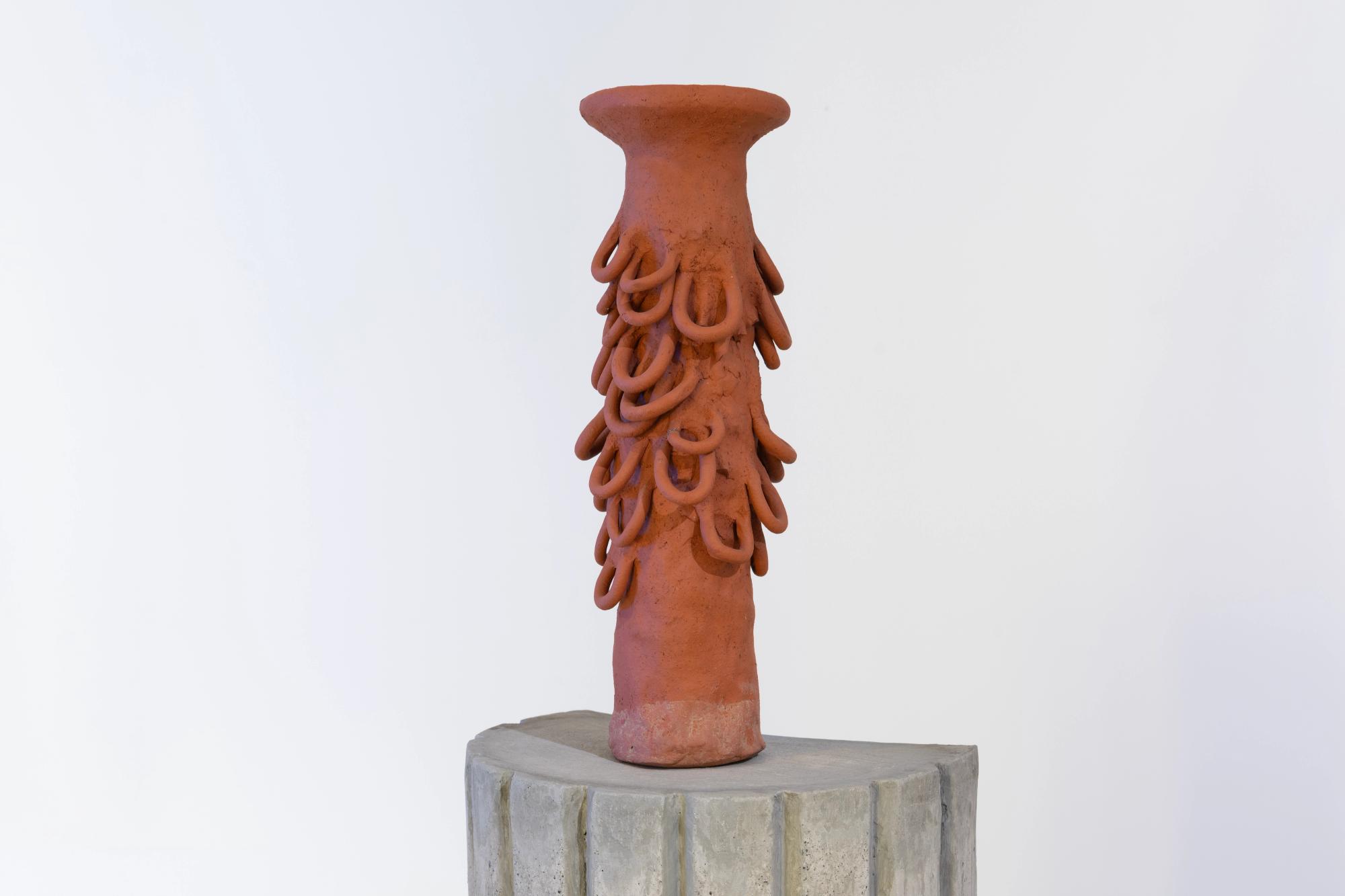
The masks that Oscar Gardea makes are all from waste he finds in junk yards, on the side of rural roads, and on borderlands. In his body of work Tecuani (Masks produced from waste)
The body of work presented herein begins with the artist being confronted with the absence of traditionally made masks in remote areas of Northern Mexico, where parallel sovereignty had taken control of the regions. The rituals already hybridized by 500 years of syncretism and violence were undergoing a new phase of transformation in which the old generation of mask makers was replaced by synthetic masks and tactical gear. The rituals, while still observed, lacked the cultural inheritance of mask fabrication. When the artist returned to his city of origin, Ciudad Juarez, on the Northern Mexican border, to continue producing masks, the waste sites where he worked were being operated by a dislocated labor force en route to the global north. These workers, primarily from Congo, Cuba, Haiti, and Venezuela, would collect materials in their spare time while the Artist was producing the masks. These sets of masks are informed by the cultural baggage of that labor force, also deemed disposable in the same measure as the people who survive by collecting, separating, trading, and stealing these materials. As for the materials, many of them begin in the Maquiladora Industry in Ciudad Juarez, where they initiate their lives as commodities produced by a sector of society subject to harsh and forced labor, the maquiladora worker, modernity's inheritor of the US slavery system. This series obeys the artist’s theoretical research, Narcofuturismo, which, in the context of the Mexican War on drugs, now claiming over half a million lives, establishes the relation between object and subject in the order of attaining personhood. These masks traverse the realm of the sacred while also being grounded in a transgression latent from the bottom of time. — Oscar Gardea
Muhannad Al Azzeh
I was there
2023-2024
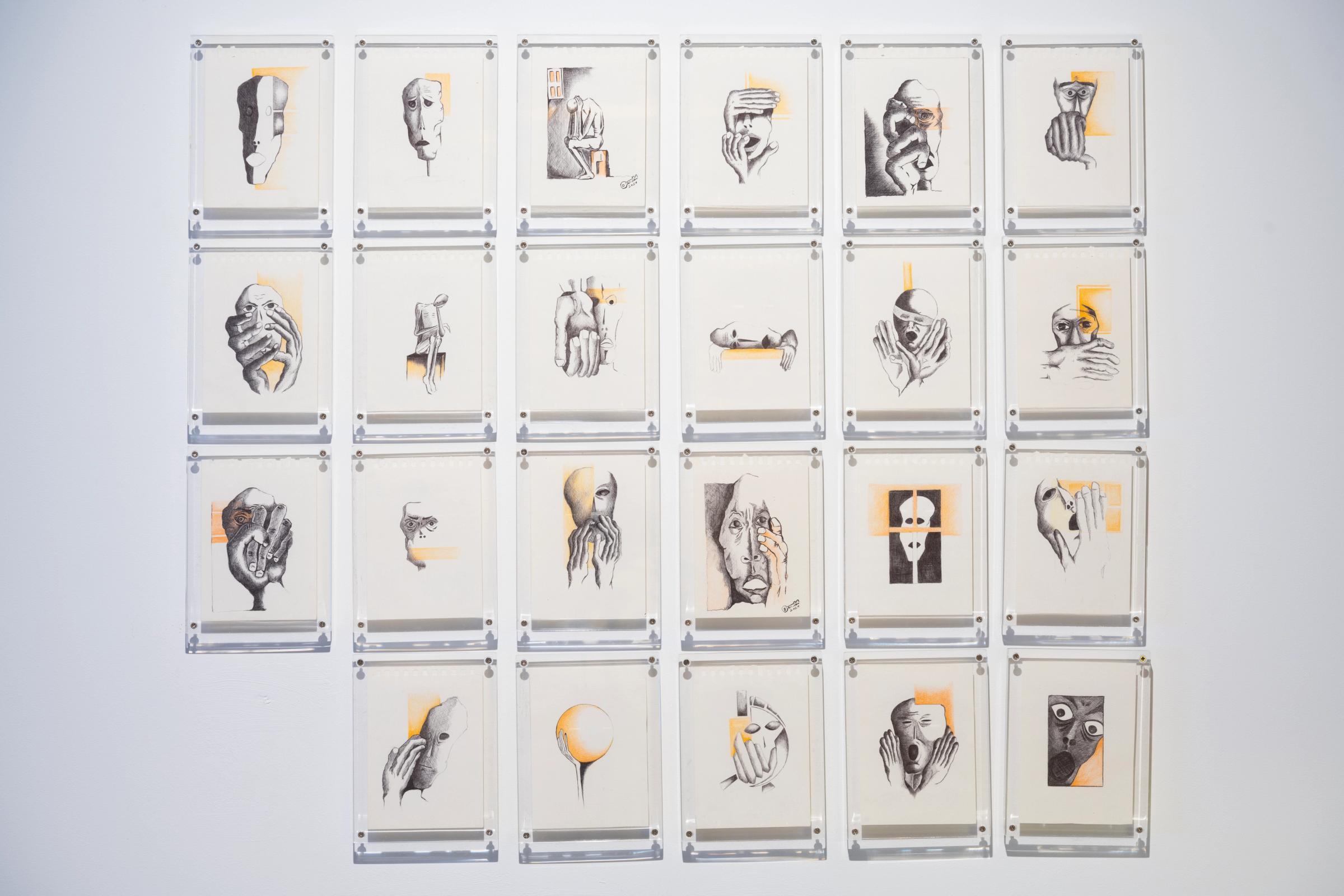
This series of sketches is not merely ink on paper, but an attempt to materialize the hardships Palestinian prisoners face in Israeli prisons. The moment of detainment might seem like a technical time of quantifiable units. Still, for the Palestinian prisoner, it is a moment of radical transformation, a transition from one time to another, a “passage.” Minutes become endless years that persist even after the instance when the state of captivity is broken. The moment of detainment is not merely the initiation of the struggle between the body and what holds it captive, but a struggle between the body and the soul, as the prisoner fights against what tries to break him/her from within to maintain a transcendence from the material conditions of incarceration. The series reflects the personal experience of the artist, as he was held captive in Israeli prisons twice in his life, spending time “inside” for four and a half years, moving between prisons, from cell to another, measured not by time units but transitions across degrees of light and darkness. The initial versions of these sketches were made in prison and were shortly after discarded, as their making was prohibited by the Zionist carceral system. This current presented version is a resurfacing of the previously discarded, a material representation of a ghostly aesthetic form after the artist was set free. The sketches illustrate the first moments of capture and heavy days of interrogation, where the prisoner experiences the most inhumane of conditions. The scenes depict the points of tension and torture, faces turned into stone and wood, the points through which the struggle unfolds between resilience and disappearance, hope and despair, a wounded body, and a soul that insists on collective preservation despite sanctioned isolation and solitude. A social debt accumulated from the bodies of prisoners. A temporal debt of time extracted by the contemporary colony. — Adam HajYahia
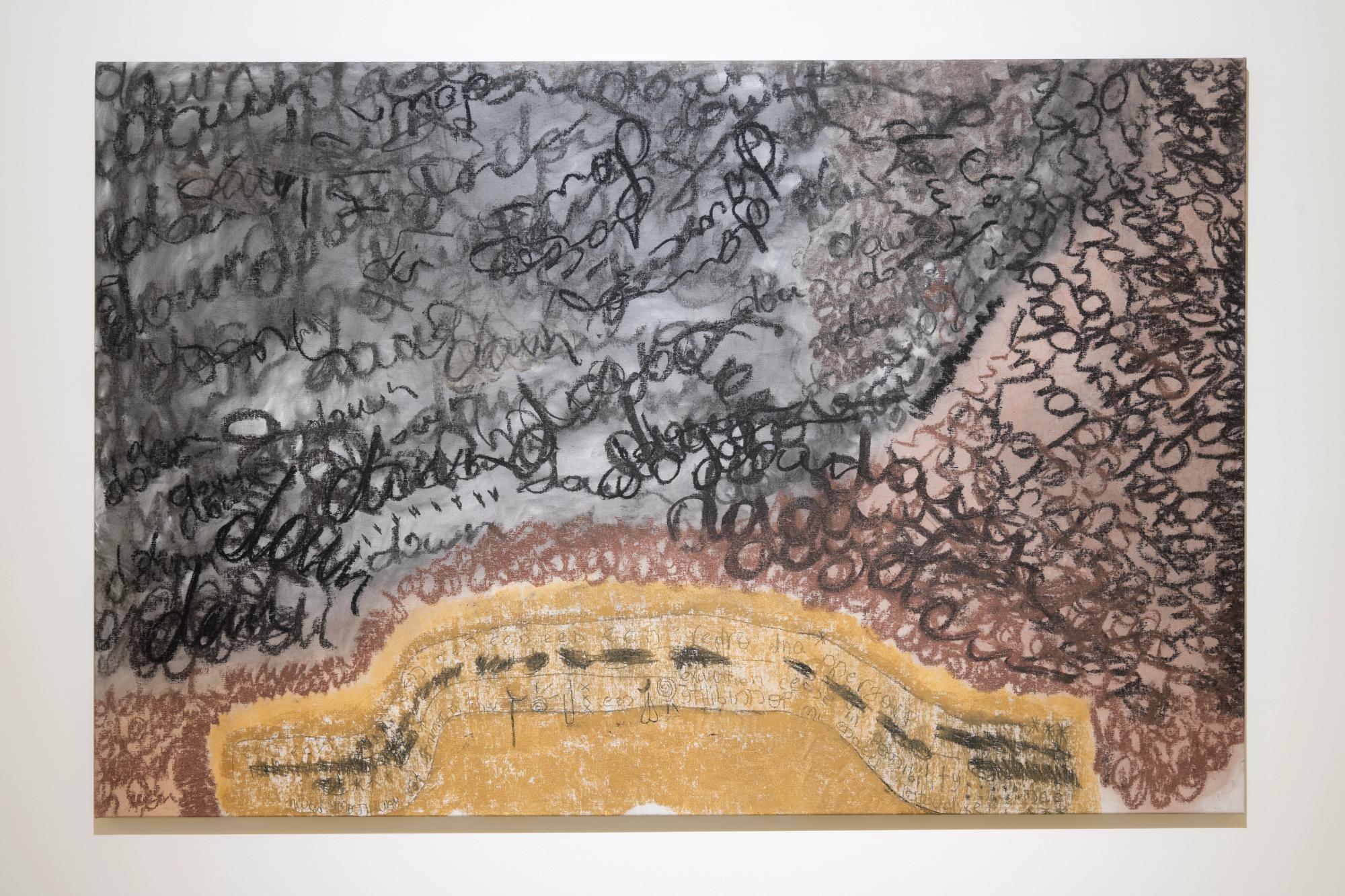
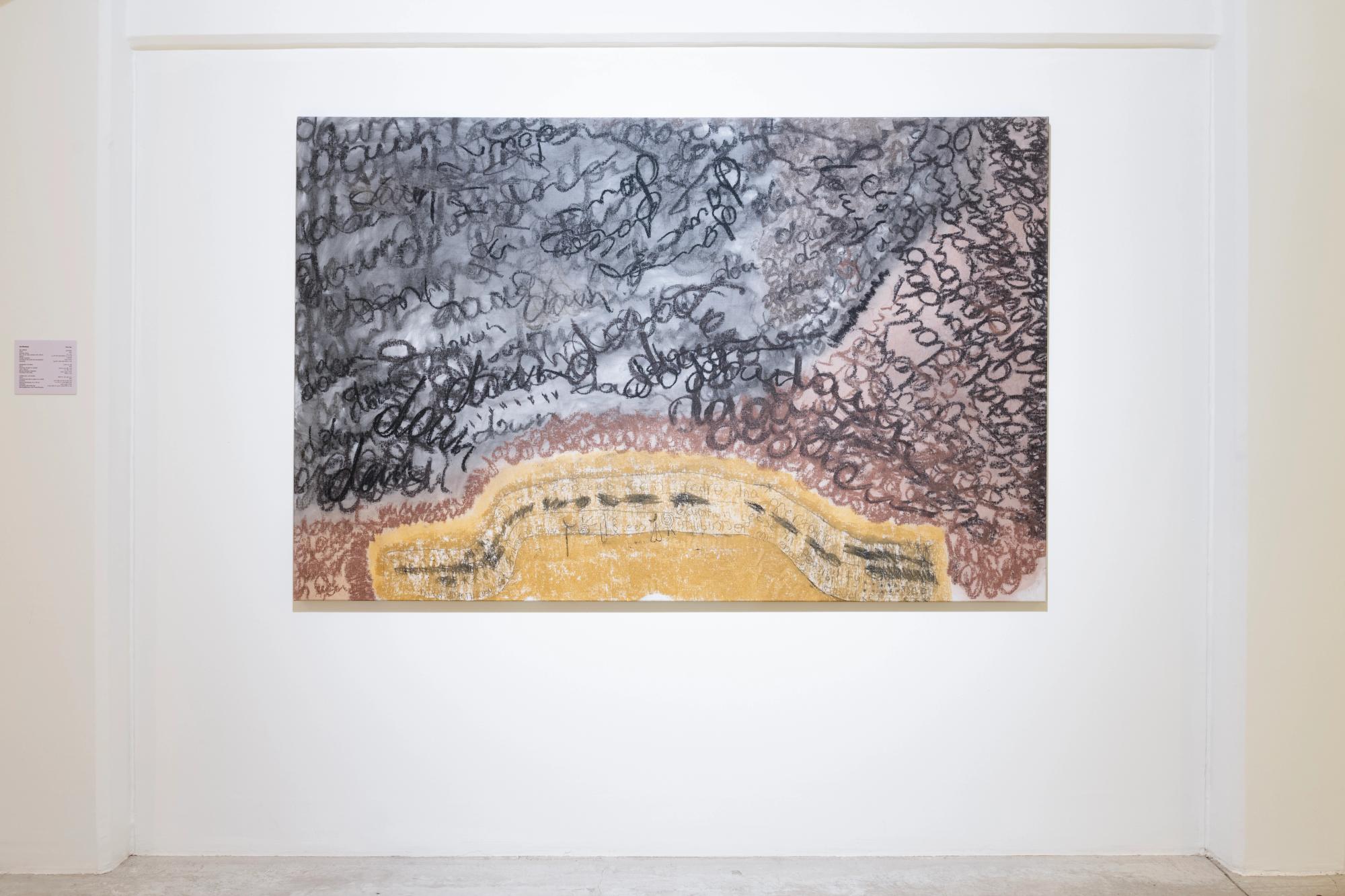
Jota Mombaça
anticipation (at dawn)
2023
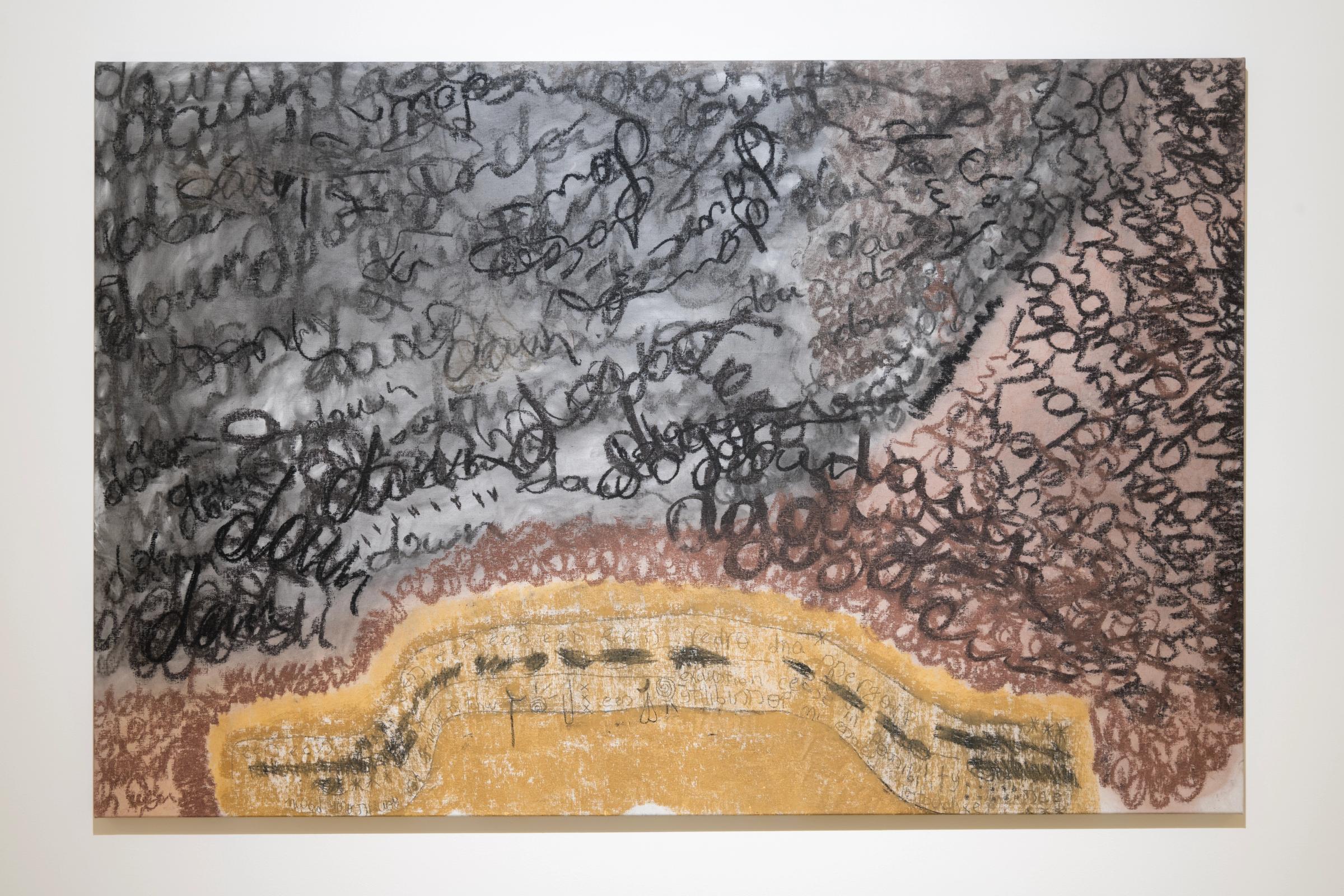
Working with text as both episteme and materiality, Jota Mombaça’s anticipation (at dawn) grapples with the notional limit of language as a horizon of potentiality. This work, through abstraction and literality, is a text written and rewritten with charcoal and paint on a canvas, forming a scenery at the edge of legibility. The written matter, unintelligible as a sign, yet legible as text, testifies to a shift in the artist’s practice that initially centered ritual and performance, which becomes illegible upon moving from the South American continent into Europe. Abstraction and linguistic opacity in this instance become processes borne of the need to find new aesthetic languages that escape neoliberal cooptation and colonial signification. When Mombaça was in Brazil, her practice centered on performative practices that were aesthetically and conceptually unforeign for the cultural-social environment. Yet with the move to live and labor within the European continent, she realized that parts of her performative and ritualistic aesthetics, which are all culturally nuanced in Latin America, can easily be subsumed into colonial-capitalist modes of reproduction and exoticization that will only be legible through culturalized voyeuristic registers. Removing her queered and racialized body from the scene rendered spectacle, and centering painting and sculpture in its stead, anticipation (at dawn) emerges as a material response to institutional representational demands, unable to shake off the grips of the market’s object-commodity fetish. — Adam HajYahia
Dina Mimi
Thousand Thrashing Arms (ابو الخطّاف)
2024
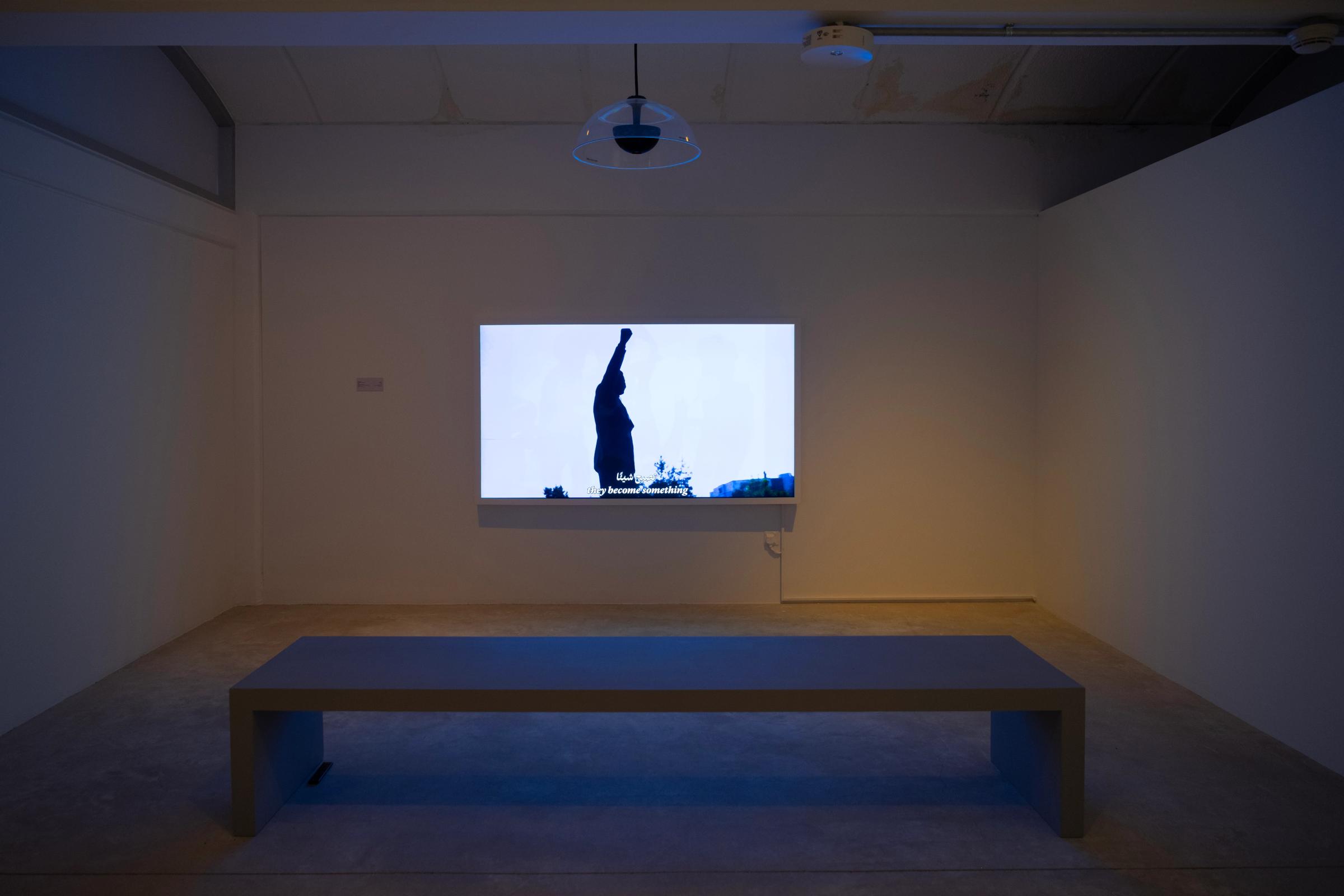
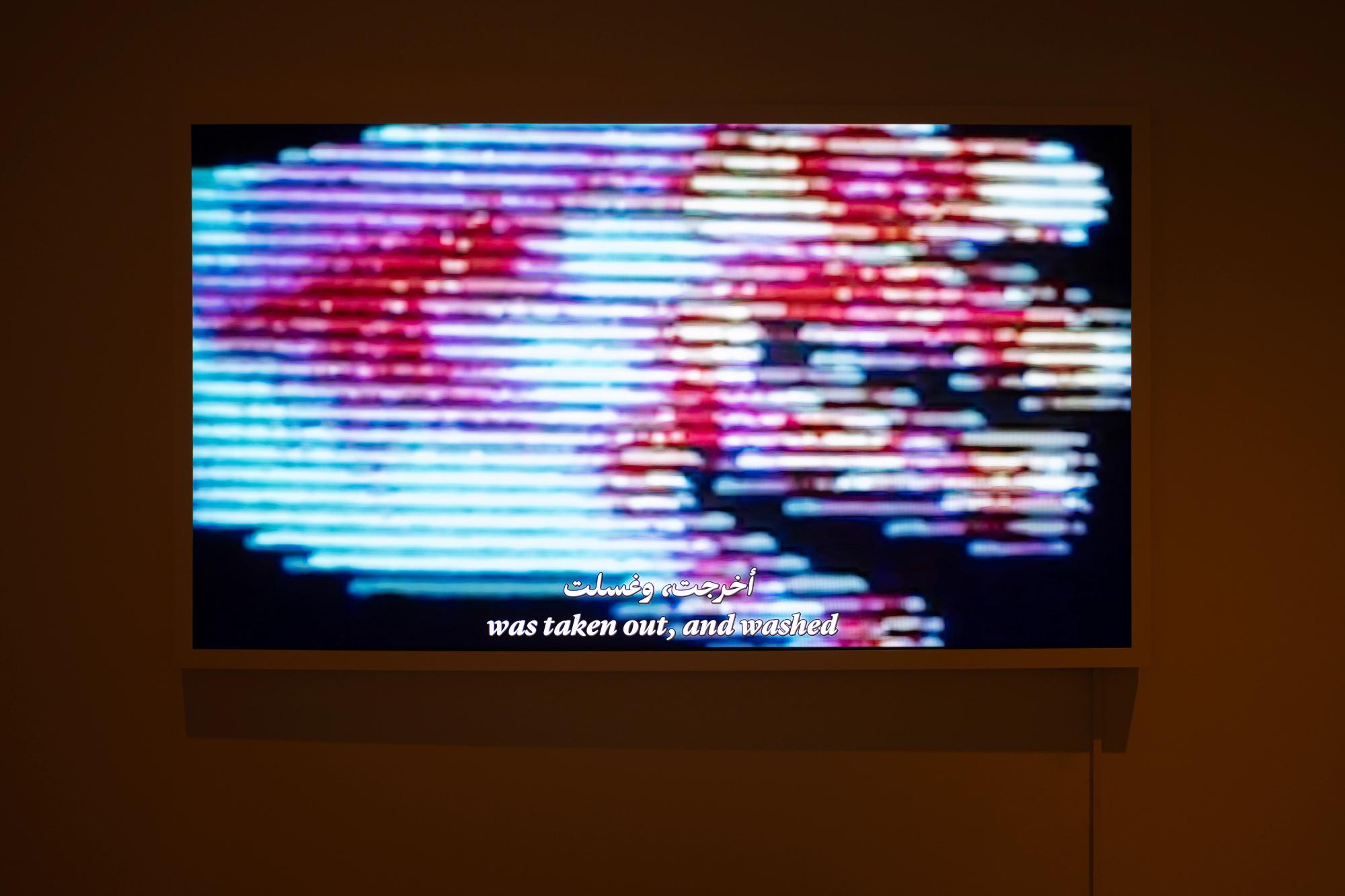
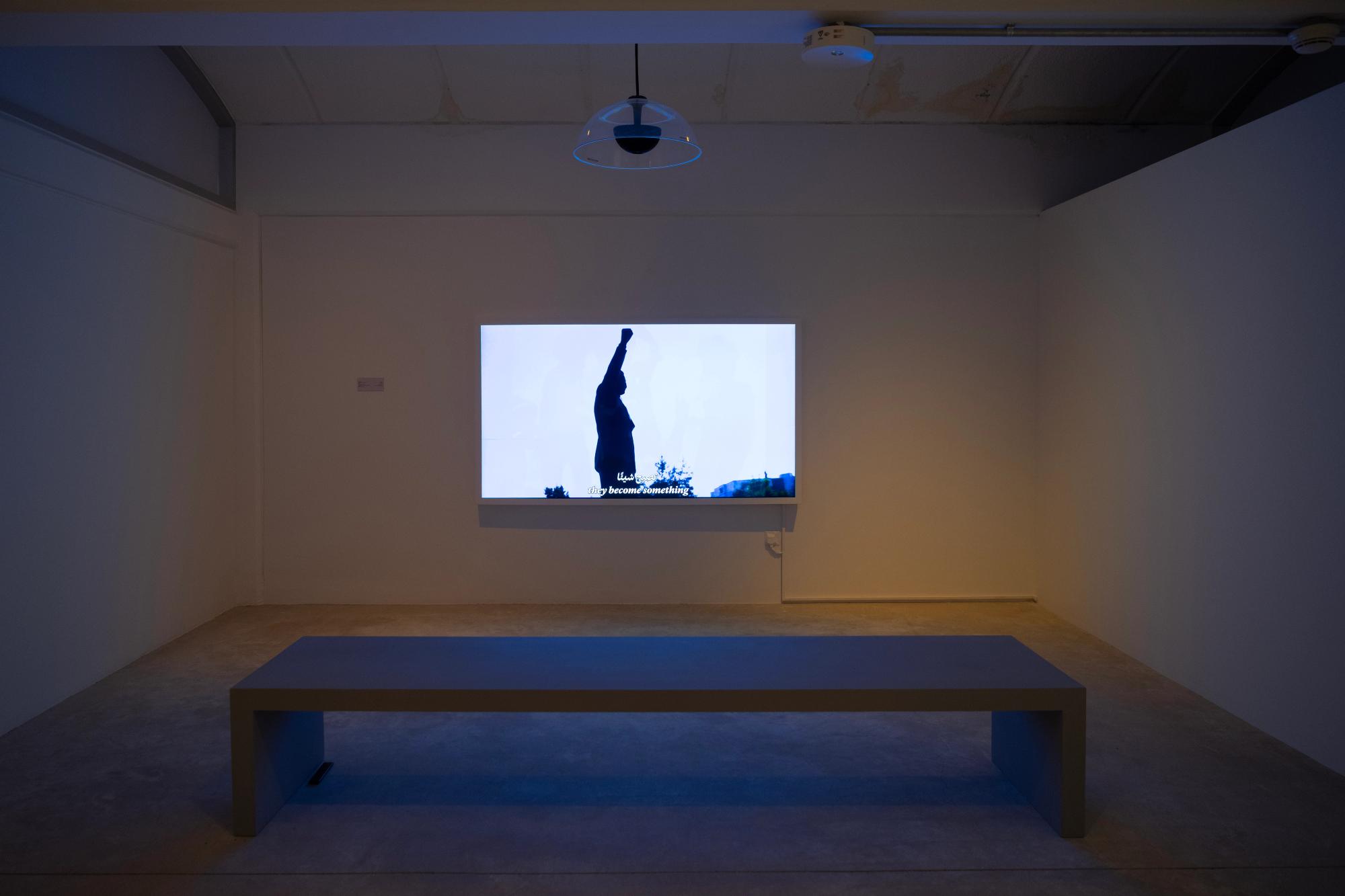
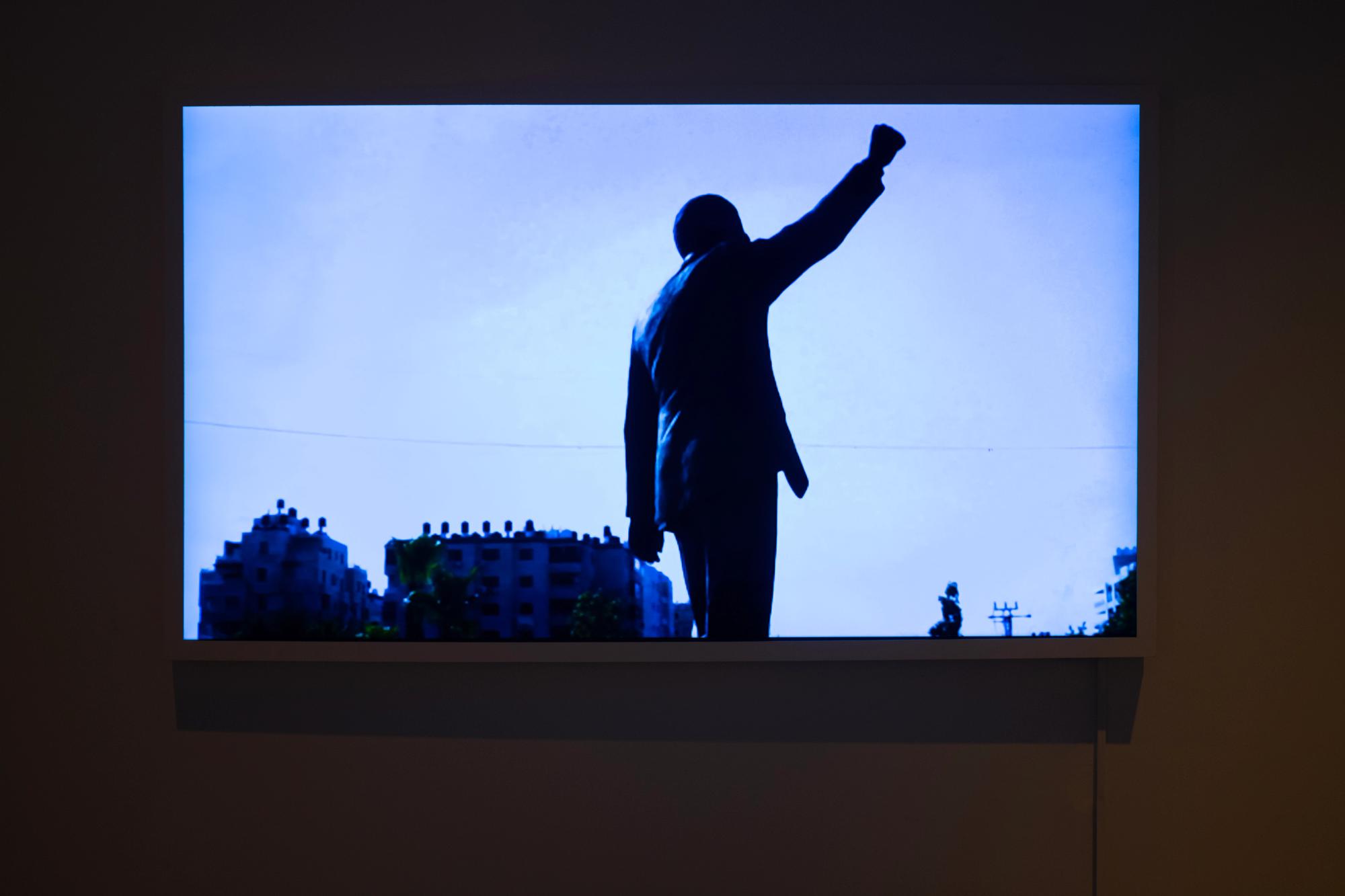
In Thousand Thrashing Arms, Mimi experiments with the relationship between liberation, dreams and movement by weaving together found footage with the original film.
Drawing on the words of Frantz Fanon—“The first thing which the native learns is to stay in his place and not to go beyond certain limits... I dream I am jumping, swimming,
running, climbing”—the film invokes a fractured dream, by layering pixelated imagery onto high-resolution footage, in order to stretch the viewer’s imagination of liberatory insurgencies.
The film juxtaposes scenes of human and non-human figures in movement, from statues and animals to bodies wrapped in cloth, depicted in states of captivity, traversing tunnels, or resisting from underground. The edges of the body and its capacity for resisting are traversed, the body that can become concrete and steel can house foreign chants of the underground. Mimi suggests that the film is labouring and conspiring a (dissociative) dream, patching together poetic gestures of running in reverse, skipping feet, and wrapping arms, all for the inevitable sake of freedom.
— Dina Mimi
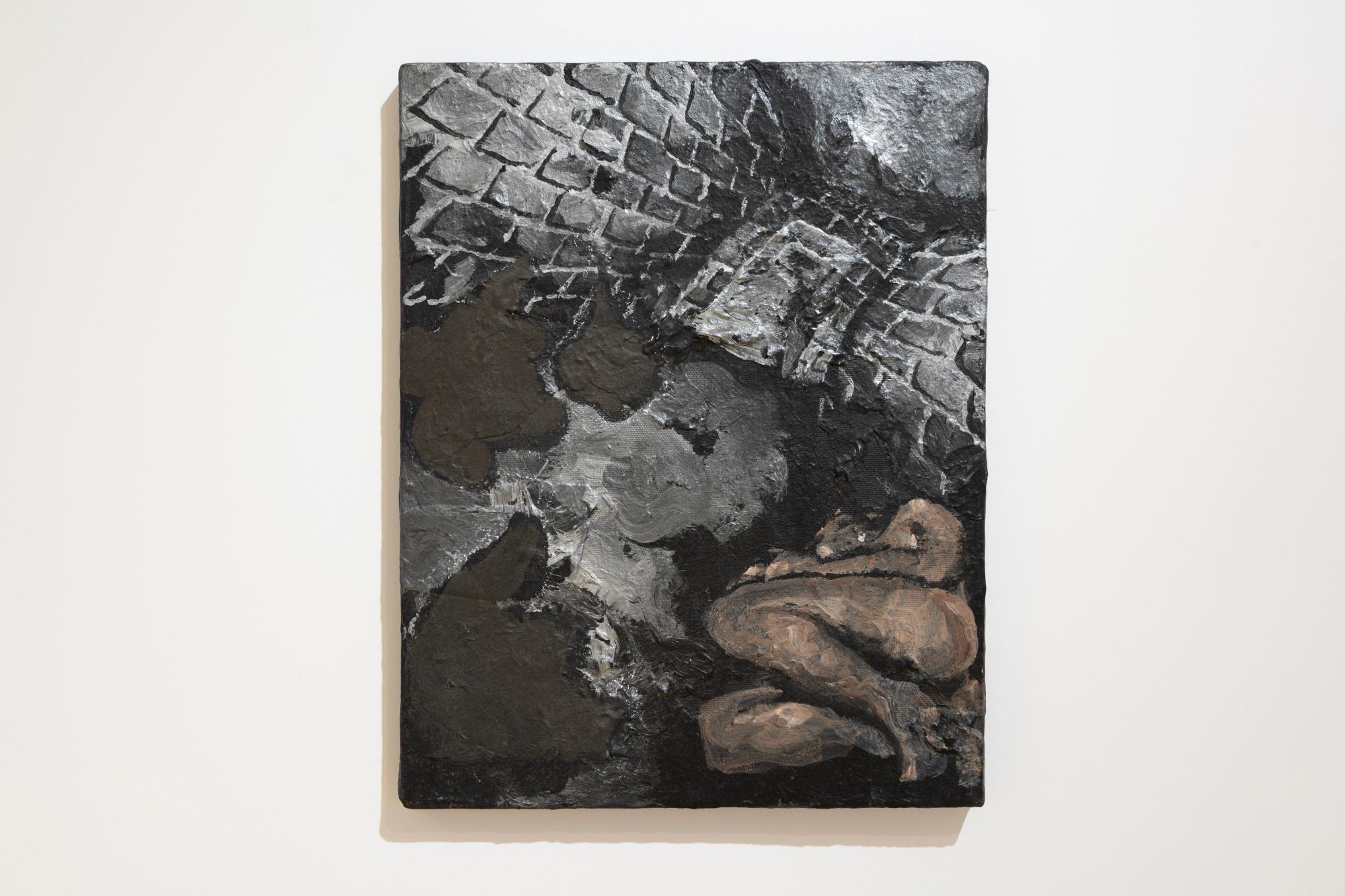
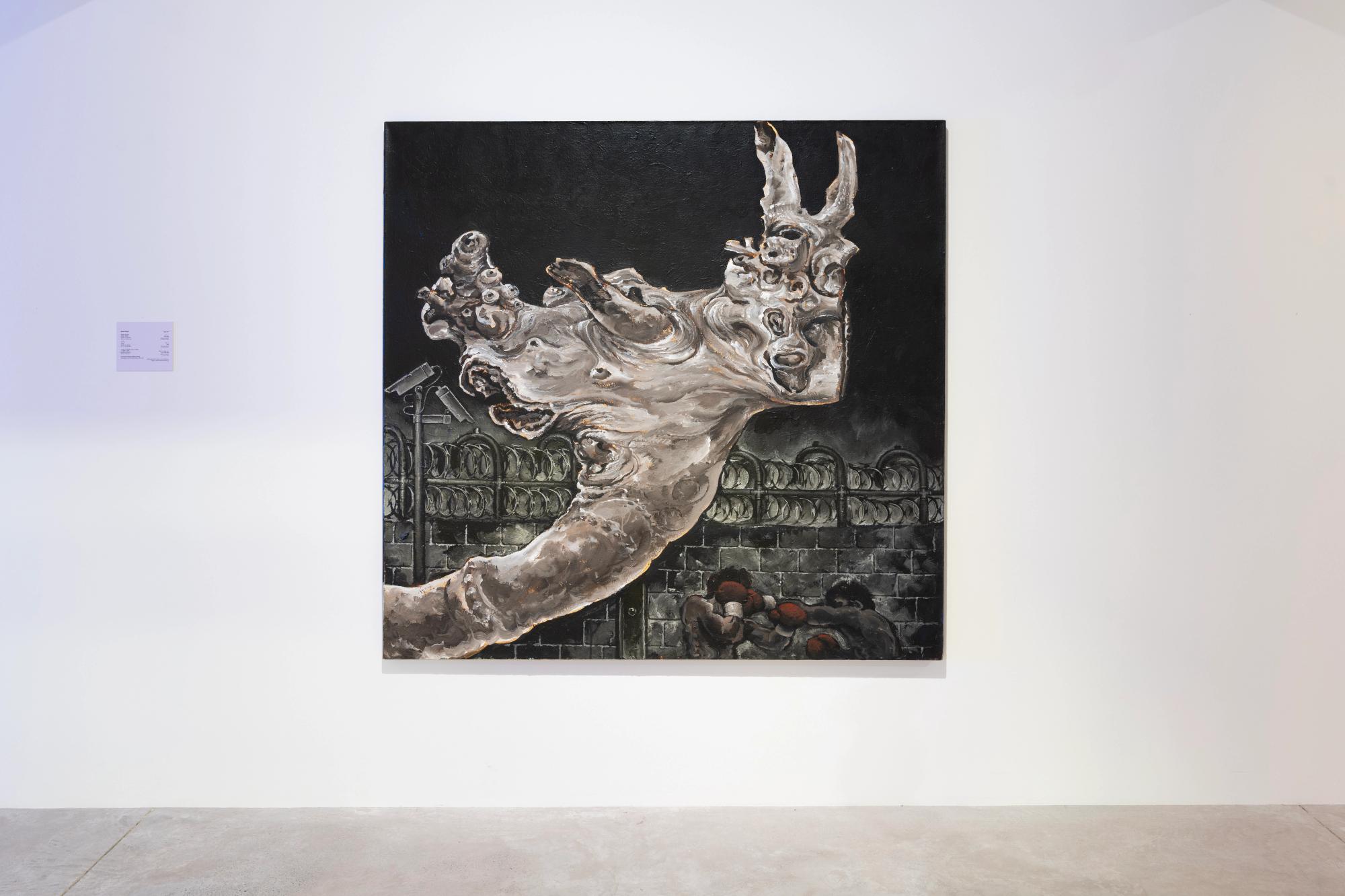
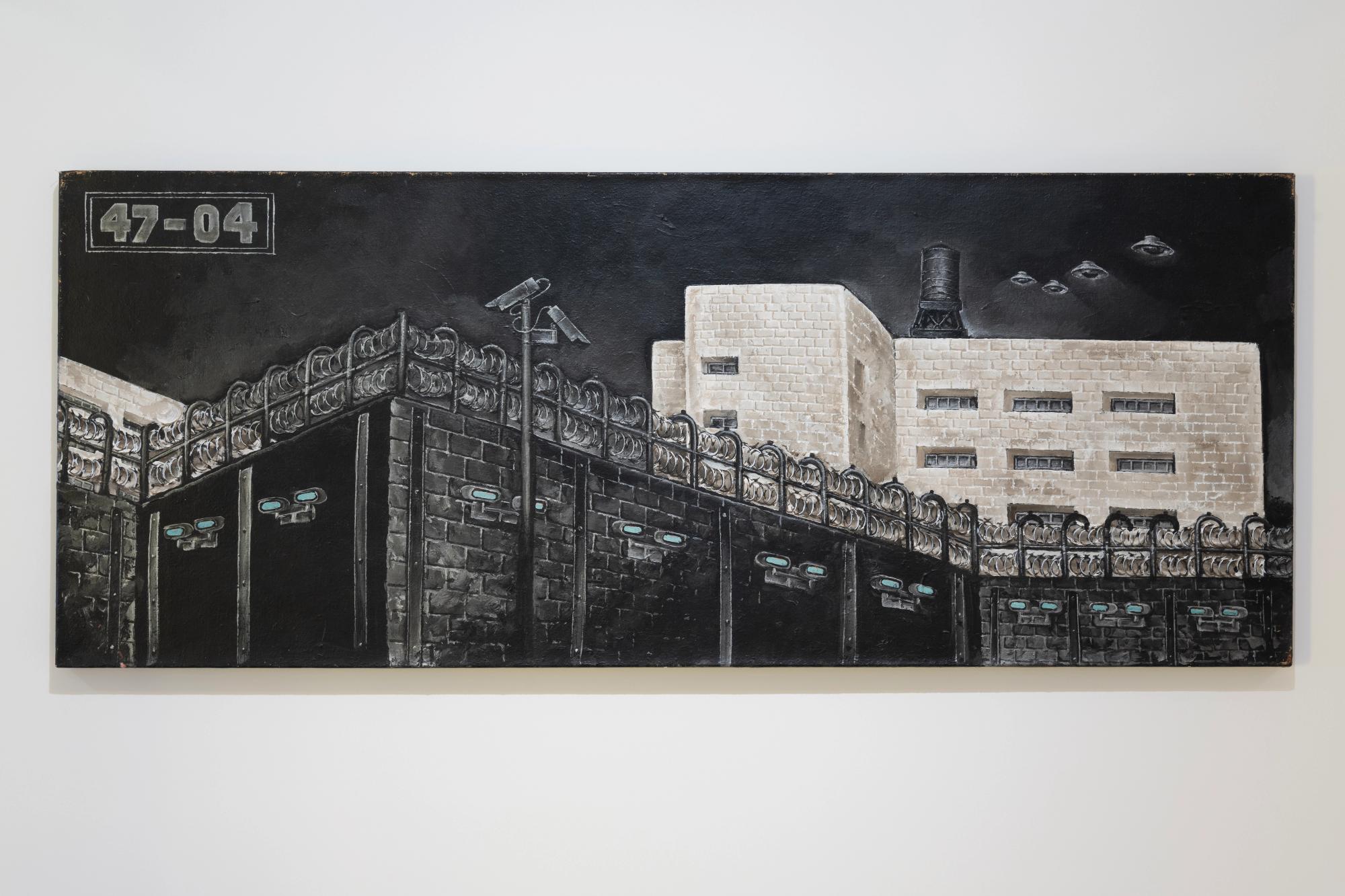
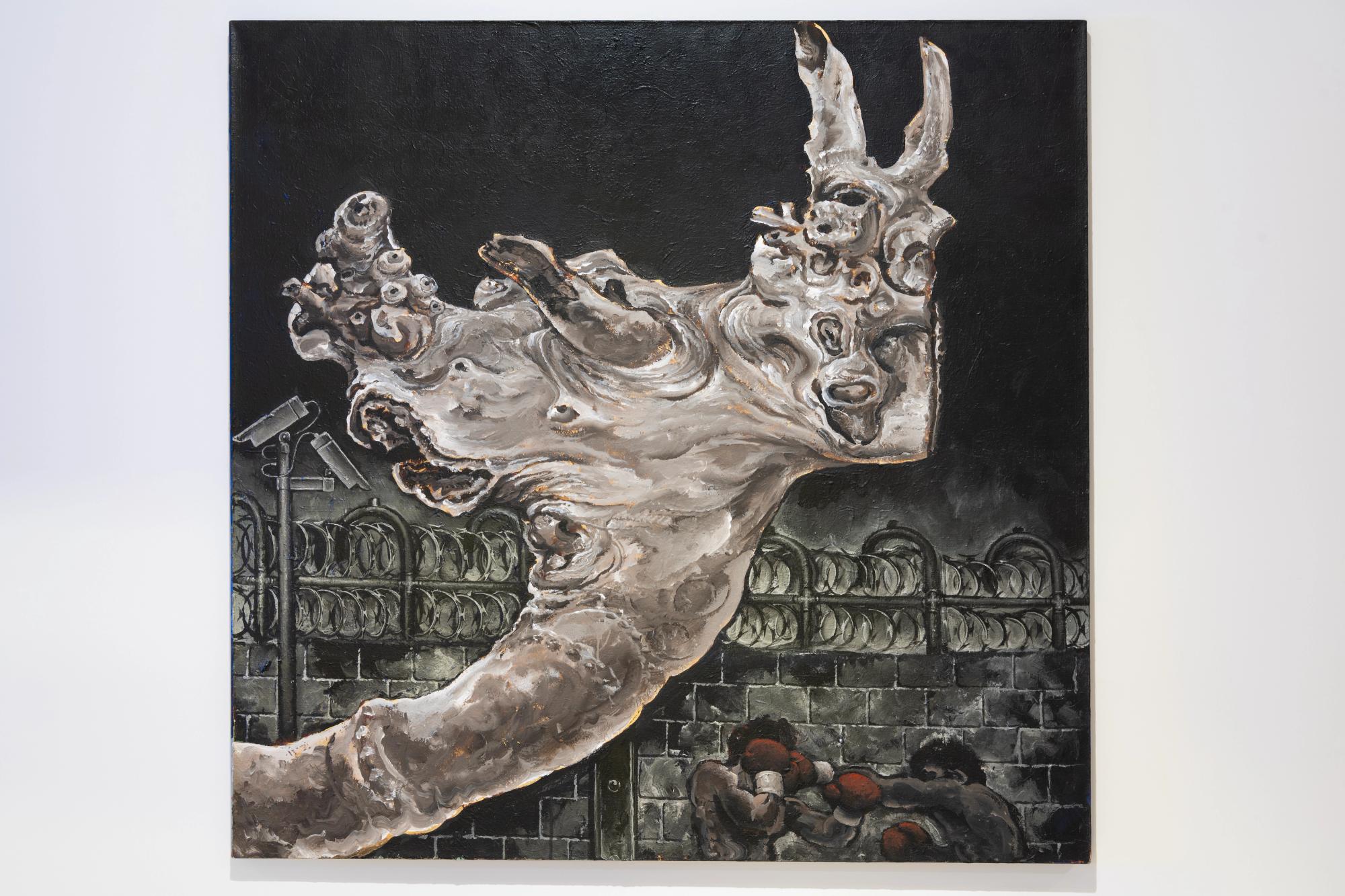
Marin Wong (three paintings)
#1 White Cypress, 1992-98
acrylic on canvas
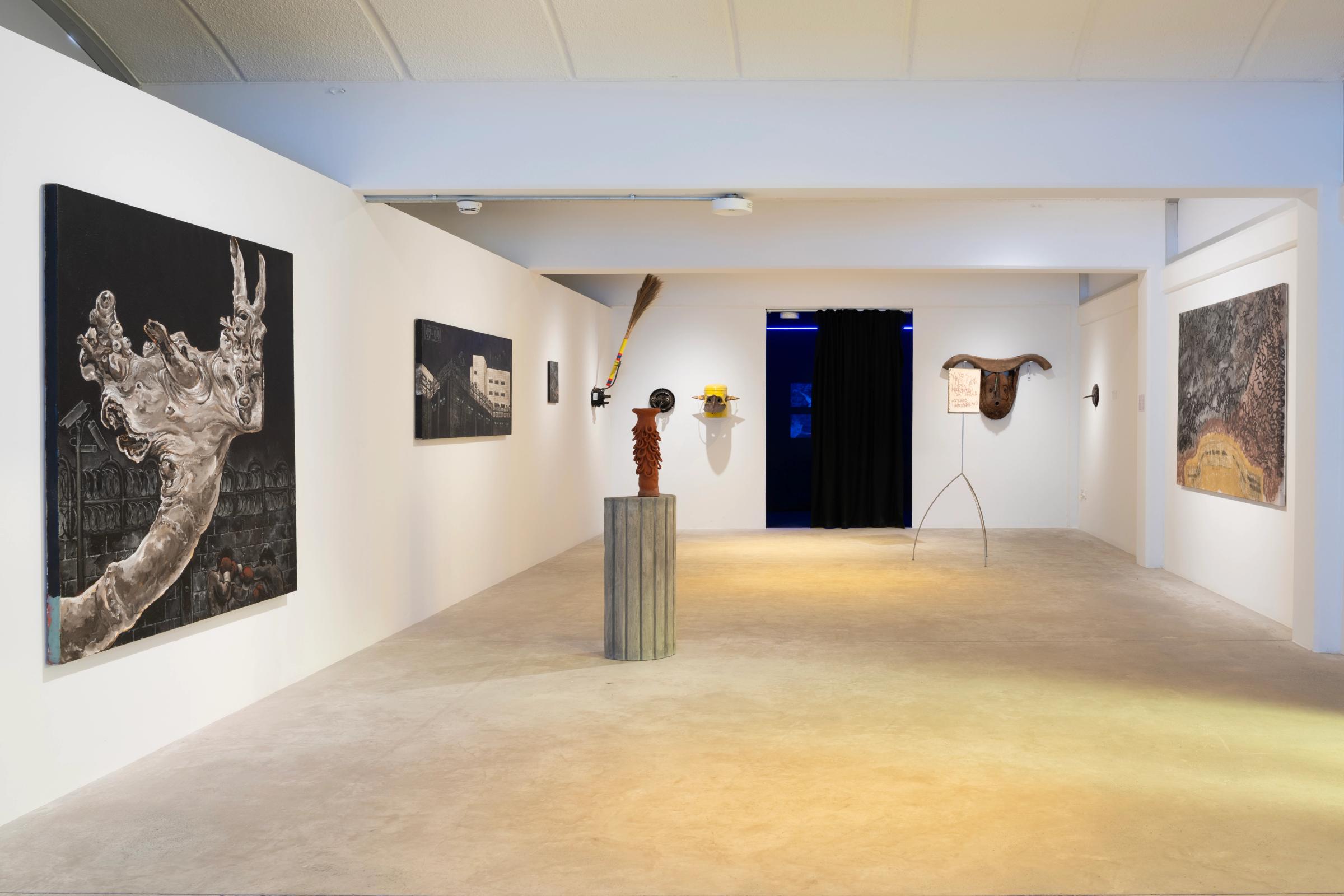
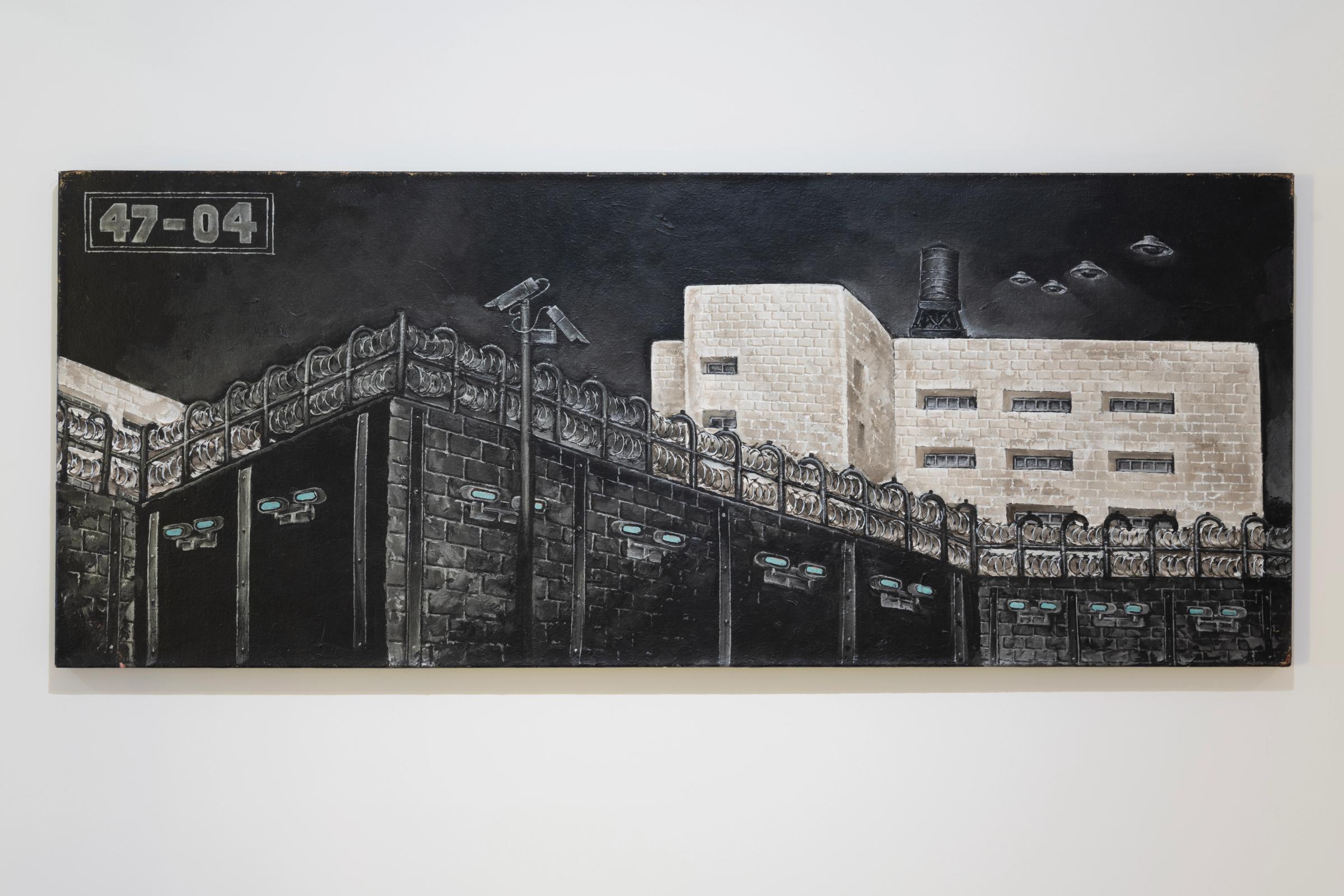
#2 47-04, 1992
acrylic on canvas
#3 1 year, 2 months, and 15 days, c. 1988-90
acrylic on canvas
Martin Wong was known for his striking paintings that often depicted the urban landscapes of Lower Manhattan in New York, particularly the Lower East Side and Chinatown, where he spent most of his adult life. Blending poetic and social realisms with gritty slum-like street art styles, his paintings mediate on migrant modernities, diasporic cultural signifiers, sign language, and erotics, informed by his life as an artist raised in San Francisco by Chinese-American parents.
Embedded in the lives of communities living on the margins of American societies in the 1980s, his depictions were shaped by his own personal experiences and those of others he loved. Across the different phases of his work, Wong was very invested in painting prisons and male prisoners, with a tendency to grapple with their homoerotic fantasies. He was interested in showing how desire, sexual and otherwise, was a force within the prohibitive carceral structure that traversed and transgressed the prison’s walls. Libido is both an affect and a force in his prison scenes. Wong understood the prison to be a perspicuous reflection of the racializing dynamics and sexual infrastructures that dominate American life, but also wanted to think through the precarious means through which those disenfranchised persisted despite violence.
Unlike the majority of his painting repertoire, which is defined by realist colorful scenes and luscious reds and browns, the three paintings in the exhibition stand out in their strict blacks, whites, and greys. All three paintings deal with prisons and their infrastructures of surveillance and dehumanization, but also eerily gesture towards a more surrealist departure in his language that lingers in the small moments prisoners cling to, persisting on life. — Adam HajYahia
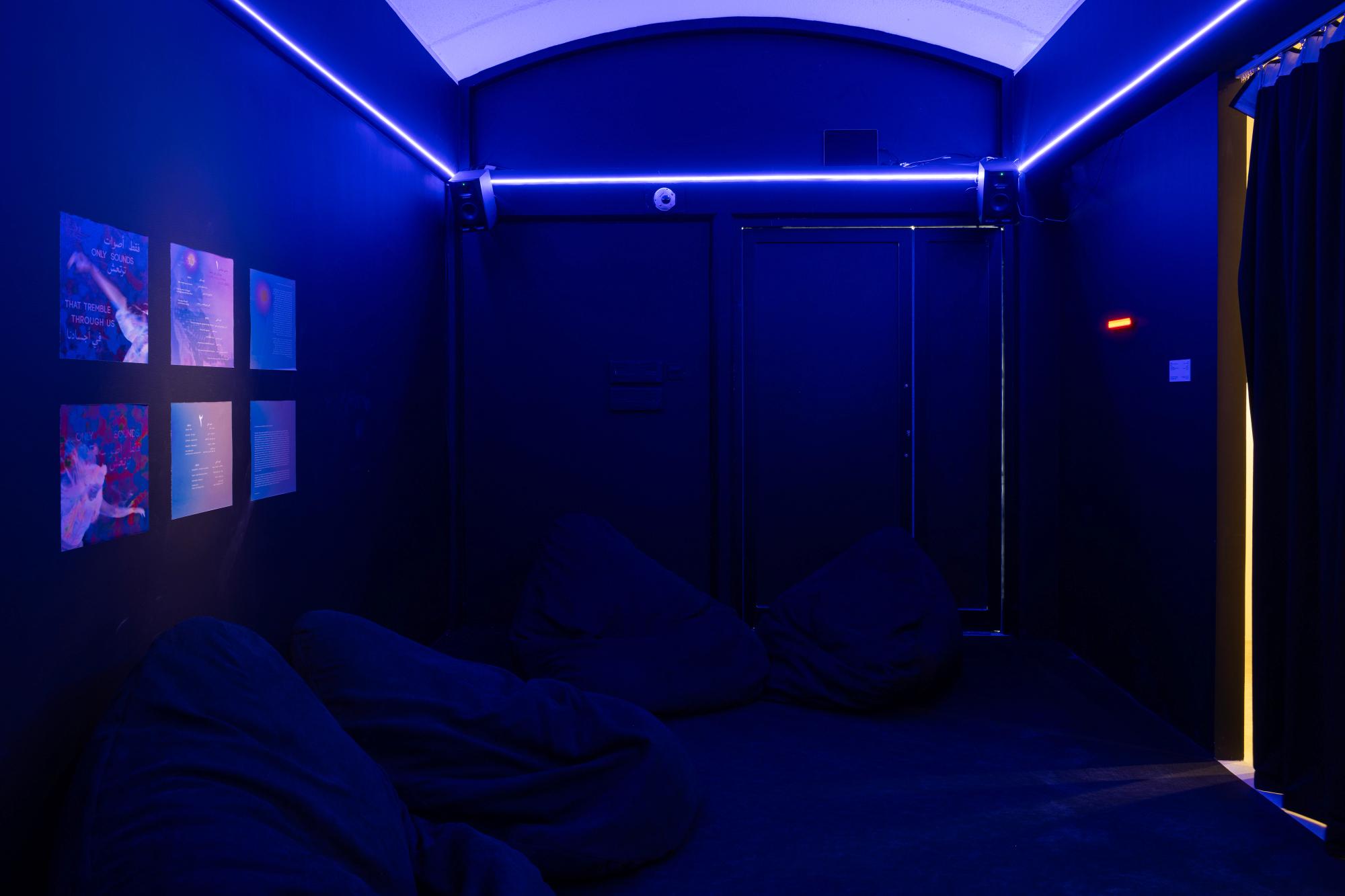
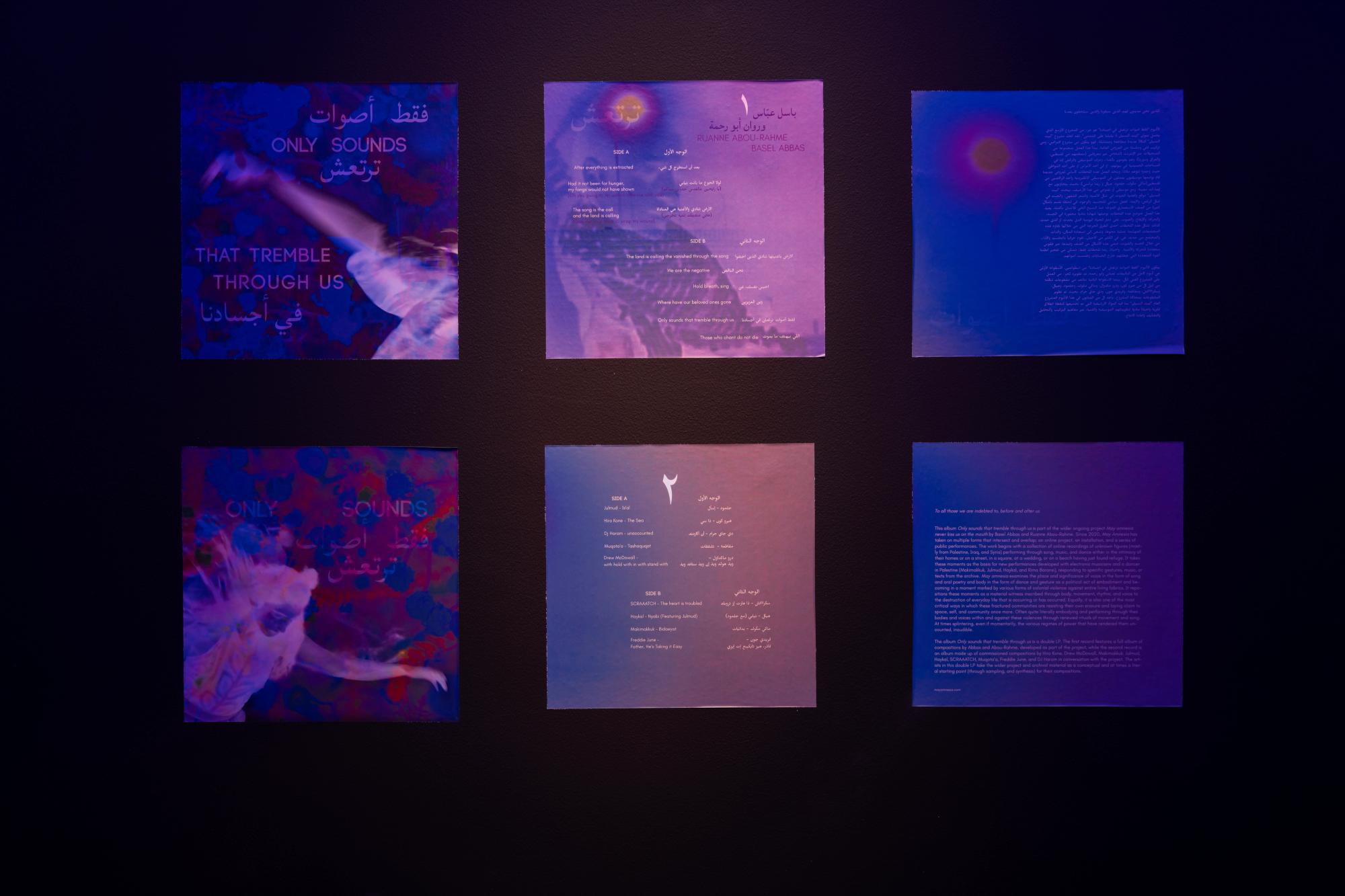
Only sounds that tremble through us
Double LP - Vinyl
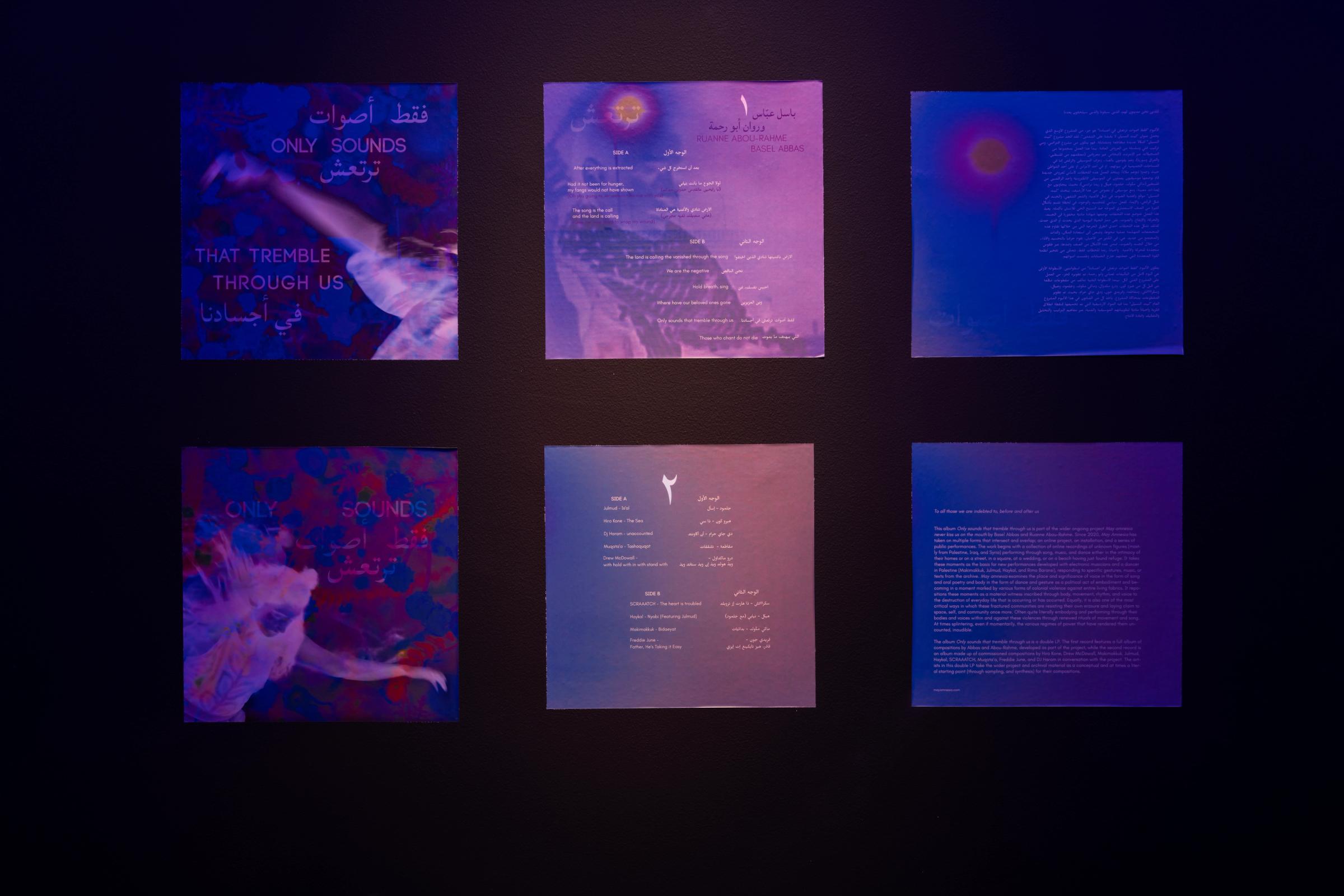
Only sounds that tremble through us is part of the ongoing project from Basel Abbas and Ruanne Abou-Rahme, May amnesia never kiss us on the mouth. This evolving work has taken on multiple forms that intersect and overlap: an online project (mayamnesia.com), installations, and a series of public performances.
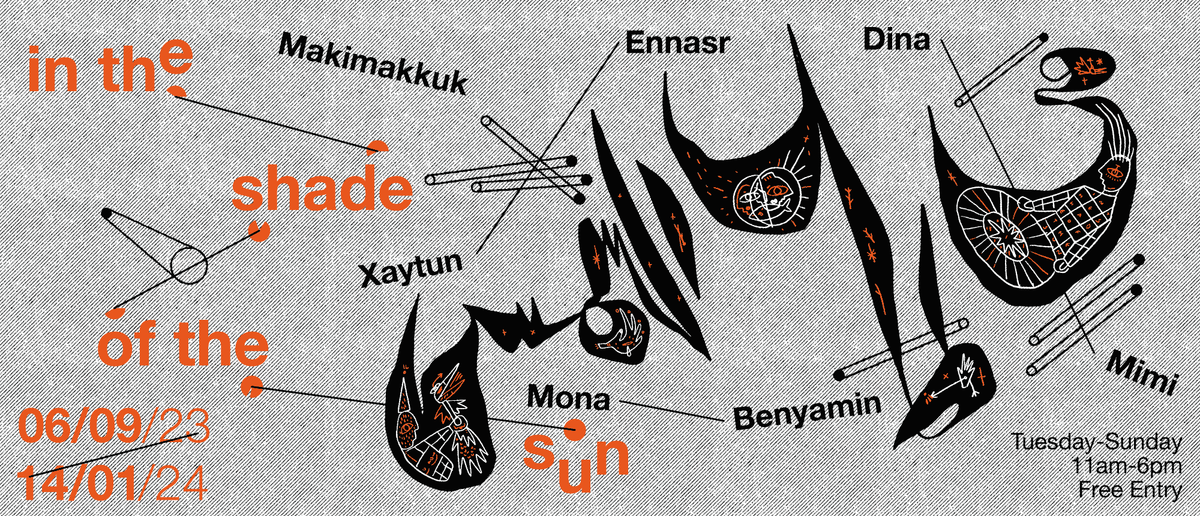
The album Only sounds that tremble through us is a double LP. The first record features a full album of compositions by Abbas and Abou-Rahme, developed as part of the project between 2022-2024, while the second record is an album made up of commissioned compositions by Hiro Kone, Drew McDowall, Makimakkuk, Julmud, Haykal, SCRAAATCH, Muqata’a, Freddie June, and DJ Haram in conversation with the project. The artists invited have all had a long engagement with the wider project; several of these artists had been invited by Abbas and Abou-Rahme to perform in the installation as part of the exhibitions of the work at the MoMA, whilst others are featured in the work itself. The artists in this double LP take the wider project and archival material as a conceptual and, at times, a literal starting point (through sampling and synthesis) for their compositions.
The wider project begins with a collection of online recordings of unknown figures (mostly from Palestine, Iraq, and Syria) performing through song, music, and dance either in the intimacy of their homes, or on a street, in a square, at a wedding, or on a beach having just found refuge. It takes these moments as the basis for new performances developed with electronic musicians and a dancer in Palestine (Makimakkuk, Julmud, Haykal, and Rima Baransi), responding to specific gestures, music, or texts from the archive. May amnesia examines the place and significance of voice in the form of song and oral poetry, and body in the form of dance and gesture as a political act of embodiment and becoming in a moment marked by various forms of colonial violence against entire living fabrics. The project repositions these moments as a material witness inscribed through body, movement, rhythm, and voice to the destruction of everyday life that is occurring or has occurred. Equally, it is also one of the most critical ways in which these fractured communities are resisting their own erasure and laying claim to space, self, and community once more. Often, quite literally embodying and performing through their bodies and voice within and against these violences through renewed rituals of movement and song. At times splintering, even if momentarily, the various regimes of power that have rendered them uncounted, inaudible. — Basel Abbas and Ruanne Abou-Rahme
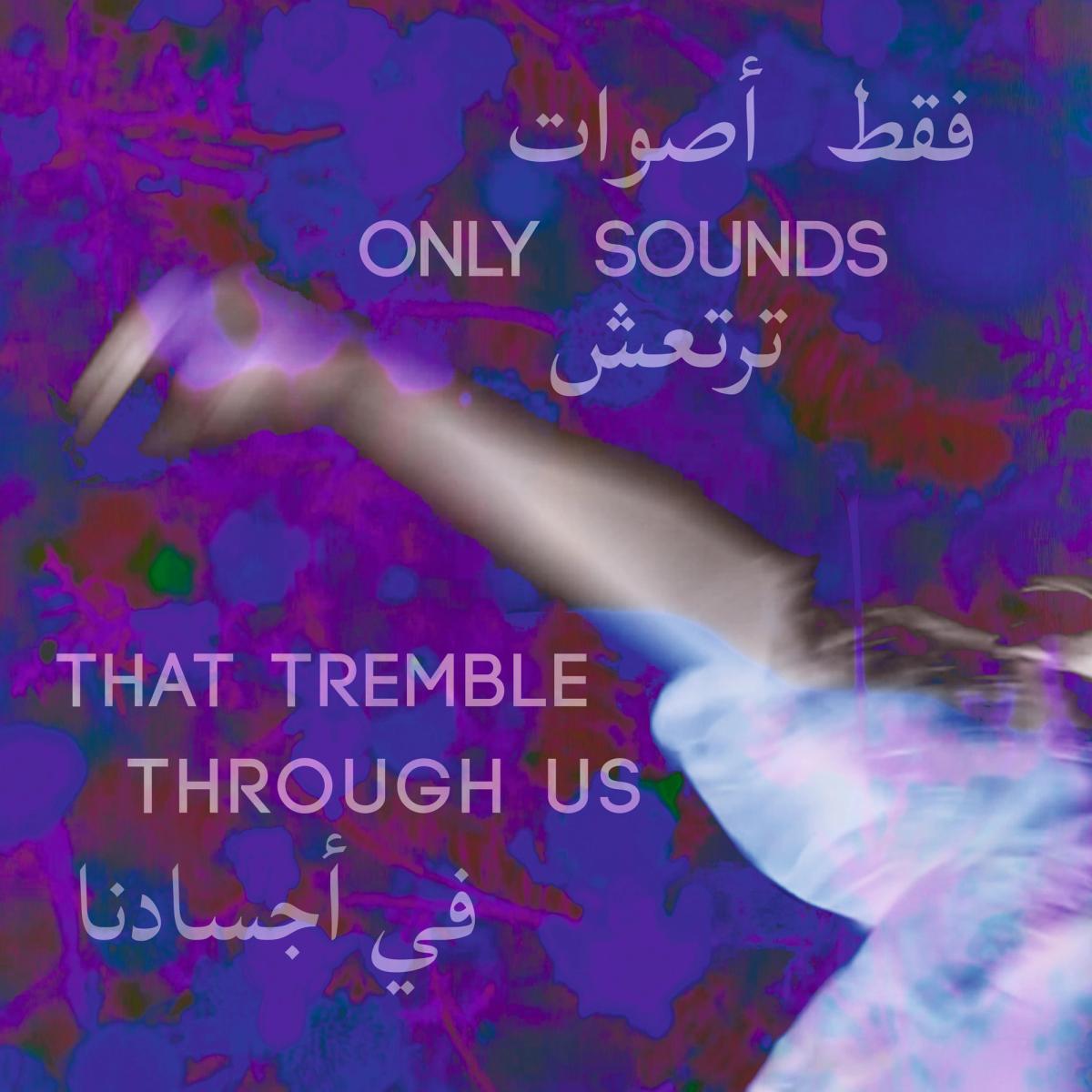
Only sounds that tremble through usفقط اصوات ترتعش في أجسادنا
In the shade of the sunفي ظل الشمس
To all those we are indebted to إلى كلِّ الذين نحن مَدينون لهم